A small live venue is a café, a bar, a restaurant stage, or a community hall. The room holds a few dozen people, the walls are close, and the sound system is often the band’s own gear. A stereo keyboard amplifier in this setting does two jobs at once: it gives the keyboard player a clear monitor on stage, and it fills the room with keys and vocals when no larger PA is available.
The picks below were compared on published specifications: power output, channel count, speaker size, line outputs, feedback control, EQ, weight, and portability. Each one is a stereo keyboard amplifier with a built-in mixer, so a small band can run keys, vocals, and a backing track through one box.
Small venues reward flexibility: the amp may serve as the whole PA one night and as a stage monitor the next. Line outputs, clean sound at moderate volume, and a cabinet one person can carry all matter here.
At a Glance
| Product | Best for | Key specification |
|---|---|---|
| Roland KC-400 | Small stages as main amp | 150 watts, 4-channel stereo mixing |
| Behringer ULTRATONE KXD15 | Larger small venues and full bands | 600 watts, 15-inch woofer, 4 channels |
| Roland KC-200 | Cafés and quiet rooms | 100 watts, 4-channel stereo mixing |
| Roland KC-80 | Personal stage monitor | 50 watts, 3-channel stereo mixing |
How to Choose
Power for the room. A small venue needs enough clean power to reach the back tables without distortion. A 100-watt amp suits a café, a 150-watt amp suits a bar stage, and a 600-watt amp suits a larger hall or a loud band. Match the power to the room size and the loudest instrument on stage.
Line outputs to the house system. Many small venues have a house PA. A keyboard amp with line outputs feeds the house system while still serving as the player’s monitor. Check whether the line output is stereo, whether it carries the full mix or only the keyboard, and whether a ground lift or level control is present.
Coverage and dispersion. A single amp in a small room must spread sound across the audience, not beam it at one table. A horn tweeter widens the high frequencies, and a tilted cabinet or a stand mount aims the sound at ear level. Check the speaker layout and whether the cabinet can tilt back as a floor monitor.
Feedback control. A microphone near a loud amp in a small room will feed back. A graphic EQ and a feedback detection system help find and cut the frequencies that ring. Look for an EQ with enough bands to shape the sound for the room, and check whether feedback detection is built in.
Channel count for a small band. A small venue set often mixes a keyboard, a vocal microphone, and a backing track. A 4-channel amp handles all three without a separate mixer. At least one channel should accept an XLR microphone input, and each channel should have its own volume control.
Load-in and portability. Small venues mean narrow doors, stairs, and a parking space far from the stage. Check the weight and whether the amp has handles. A 150-watt amp with a 12-inch speaker is a one-person carry, while a 600-watt amp with a 15-inch speaker needs a second pair of hands.
Sound at moderate volume. A small venue set often plays at conversation level during dinner and louder later. The amp should sound clean and full at low volume, not only at full power. A full-range speaker with a dedicated tweeter keeps piano and vocal patches clear when the volume stays low.
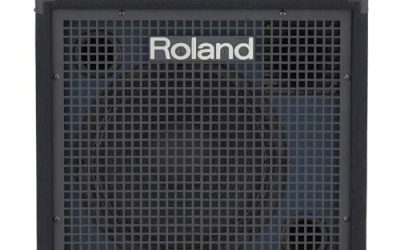
Roland KC-400

The Roland KC-400 is a 150-watt stereo keyboard amplifier with a 4-channel mixer built in. It uses a 12-inch woofer and a horn tweeter to cover the full range of a keyboard, from deep bass to bright highs. Channel 1 accepts an XLR microphone input, so the amp can mix vocals with keys, and the stereo link function connects two KC-400 units as a left and right pair.
For a small stage, the KC-400 works as the main amp or as a monitor. The 150-watt output reaches the back of a bar or a café without distortion, and the line outputs feed a house PA when the venue has one. The cabinet is sized for one person to carry through a narrow doorway.
Best for: small stages where one amp must cover the room and serve as the keyboard monitor.
Considerations: the 150-watt output suits small and medium rooms; a larger hall needs a line output to a house PA.
Behringer ULTRATONE KXD15

The Behringer ULTRATONE KXD15 is a 600-watt stereo keyboard amplifier built for larger small venues. It uses a 15-inch woofer and a 1-inch tweeter, with a 4-channel stereo mixer, a 7-band graphic EQ, and a built-in effects processor. An XLR microphone input handles vocals, and the FBQ feedback detection system helps find and cut feedback frequencies in a reflective room.
For a full band in a hall, the KXD15 has the power and the low end to carry keys over drums and guitars. The 15-inch woofer reproduces deep bass patches with authority, and the 7-band EQ shapes the sound for the room. Line outputs feed a house PA or a recorder when the amp serves as a stage monitor.
Best for: larger small venues and full bands where power and low end matter most.
Considerations: the KXD15 is heavy, so load-in needs planning and a second pair of hands. The 600-watt output is more than a quiet café needs, so the volume control and EQ matter for dinner sets.
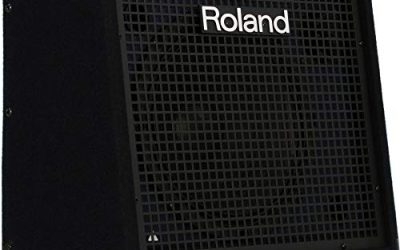
Roland KC-200

The Roland KC-200 is a 100-watt stereo keyboard amplifier with the same 4-channel mixing layout as the KC-400. It uses a 12-inch woofer and a tweeter, with an XLR microphone input on channel 1 and a stereo link function for pairing two units. The 100-watt output suits a café or a quiet room where the audience sits close to the stage.
The KC-200 sounds clean and full at moderate volume, which suits dinner sets and background music. The 4-channel mixer still handles a keyboard, a microphone, and a backing track, and the lighter cabinet is easy to carry up a flight of stairs.
Best for: cafés and quiet rooms where clean sound at moderate volume matters most.
Considerations: the 100-watt output can run out of headroom with a loud band. A larger room or a full drum kit calls for the KC-400 or a line output to a house PA.
Roland KC-80

The Roland KC-80 is a 50-watt stereo keyboard amplifier with a 3-channel mixer. It uses a 10-inch woofer and a tweeter, with an XLR microphone input and a stereo link function for pairing two units. The compact cabinet fits on a small stage or beside a piano in a tight corner.
For a small venue, the KC-80 works best as a personal stage monitor. The player hears the keys clearly, while line outputs feed the house PA or a larger amp for the room. The 50-watt output keeps the stage volume low, which helps the sound engineer balance the mix.
Best for: personal monitoring on a small stage where the house PA covers the room.
Considerations: the 50-watt output is not enough to fill a room on its own. Plan on a line output to a house PA or a larger amp for the audience, and check the output options before the gig.
Which One Is Right for You?
Choose the Roland KC-400 when one amp must cover a small stage and serve as the monitor. Choose the Behringer ULTRATONE KXD15 for a larger hall or a full band where power and low end matter. Choose the Roland KC-200 for a café or a quiet room where clean sound at moderate volume leads. Choose the Roland KC-80 as a personal monitor when the house PA covers the room.
Frequently Asked Questions
How many watts do I need for a small venue?
A 100-watt amp suits a café. A 150-watt amp suits a bar stage. A 600-watt amp suits a larger hall or a loud band. Match the power to the room size and the loudest instrument on stage.
Can a keyboard amp feed a house PA?
Yes. A keyboard amp with line outputs sends the mix to the house PA while still serving as the player’s monitor. Check whether the line output is stereo and whether it carries the full mix.
What causes feedback in a small venue?
Feedback happens when a microphone picks up sound from the amp and loops it back. A graphic EQ and a feedback detection system help find and cut the frequencies that ring in a small, reflective room.
Can one keyboard amp serve as the whole PA for a small band?
Yes, in a small room. A 4-channel amp with an XLR microphone input can mix keys, vocals, and a backing track in one box. A larger room needs a separate PA or a line output to a house system.
Bottom Line
For most small live venues, the Roland KC-400 is the all-round pick with the right mix of power, channels, and portability. The KC-200 suits quieter rooms, the KXD15 covers larger halls and full bands, and the KC-80 works as a personal monitor when the house PA covers the room.
Disclosure: As an Amazon Associate, this site earns from qualifying purchases.