An electronic piano asks more of an amplifier than most keyboards do. A piano patch spans the full range of the instrument, from deep bass notes to bright highs, and it changes character with touch. A soft passage needs a clear, quiet amp that keeps the tone warm at low volume. A loud passage needs headroom so the sound stays clean when the player digs in. Stereo matters too, because piano samples are recorded in stereo and the sense of space is part of the sound.
The picks below were compared on published specifications: power output, channel count, speaker size, frequency response, EQ, inputs, outputs, weight, and portability. All four are stereo keyboard amplifiers with a flat, full-range response, which means they reproduce a piano patch without coloring the tone the way a guitar amp would.
The right choice depends on the performance setting: a recital hall needs power and line outputs, a home performance needs clean sound at low volume, and a small stage needs a monitor that lets the player hear every nuance of touch and pedal.
At a Glance
| Product | Best for | Key specification |
|---|---|---|
| Roland KC-200 | Home and recital piano | 100 watts, 4-channel stereo mixing |
| Roland KC-400 | Piano with vocals on stage | 150 watts, 4-channel stereo mixing |
| Roland KC-80 | Intimate piano settings | 50 watts, 3-channel stereo mixing |
| Behringer ULTRATONE KXD12 | Piano in a full band | 600 watts, 12-inch woofer, 4 channels |
How to Choose
Flat, full-range response. A piano amp should reproduce the patch as it was recorded, without boosting the bass or cutting the highs. Look for a full-range speaker with a dedicated tweeter and a published frequency range that covers the piano from its lowest note to its highest. A flat response keeps the tone natural across the whole keyboard.
Stereo imaging. Piano samples are recorded in stereo, with the low notes placed to one side and the high notes to the other. A stereo amp keeps that width, so the piano sounds like an instrument in a room rather than a single point of sound. Some amps also link in stereo pairs for a wider stage image.
Clarity at low volume. Much of a piano performance happens quietly. The amp should sound full and warm at low volume, not thin or harsh. A quality woofer and tweeter pairing keeps the tone balanced when the volume stays down, and a good EQ helps shape the sound for the room.
Headroom for loud passages. A loud passage needs power in reserve so the sound stays clean when the player digs in. An amp with more watts than the room needs gives that headroom. Check the power output against the size of the room and the loudest passage in the program.
Touch and pedal nuance. A piano performance lives in the details: the weight of a chord, the decay of a note, the shimmer of the sustain pedal. An amp with a clean signal path and low noise lets those details through. Check the signal-to-noise behavior and whether the amp adds hiss at low volume.
Line outputs for the house and the recorder. A recital hall often has its own PA, and a performance may be recorded. Line outputs feed the house system and a recorder while the amp serves as the player’s monitor. Check whether the line output is stereo and whether it carries the full mix.
Portability for recitals. A piano amp travels to recital halls, churches, and schools. Check the weight and whether the amp has handles. A 50-watt or 100-watt amp with a 10-inch or 12-inch speaker is a one-person carry, while a 600-watt amp needs a second pair of hands.
Roland KC-200

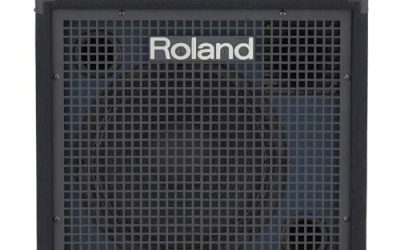
The Roland KC-200 is a 100-watt stereo keyboard amplifier with a 4-channel mixer built in. It uses a 12-inch woofer and a tweeter to cover the full range of a piano, from deep bass to bright highs, with a flat response that keeps the tone natural. Channel 1 accepts an XLR microphone input, so the amp can mix a vocal or an announcement with the piano, and the stereo link function connects two KC-200 units as a left and right pair.
For piano performance, the KC-200 sounds clean and full at moderate volume, which suits a recital hall or a home performance. The 12-inch woofer gives the low notes weight without muddiness, and the tweeter keeps the highs clear. The 4-channel mixer handles a piano, a microphone, and a backing track without extra gear.
Best for: home and recital piano where clean tone at moderate volume matters most.
Considerations: the 100-watt output can run out of headroom in a large hall or with a full band.
Roland KC-400

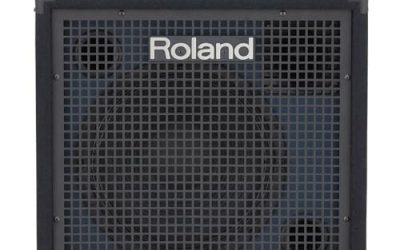
The Roland KC-400 is a 150-watt stereo keyboard amplifier with a 4-channel mixer built in. It uses a 12-inch woofer and a horn tweeter, with an XLR microphone input on channel 1 and a stereo link function for pairing two units. The 150-watt output gives the headroom a loud passage needs while keeping the tone clean.
For piano with vocals on stage, the KC-400 covers both in one box. The piano stays full and natural, and the microphone channel lets a singer or an announcer share the same amp. The line outputs feed a house PA when the hall has one, and the cabinet is sized for one person to carry.
Best for: piano performances with vocals where one amp must cover both.
Considerations: the KC-400 is a full-size amp, so it needs a proper space in a car or a storage room.
Roland KC-80

The Roland KC-80 is a 50-watt stereo keyboard amplifier with a 3-channel mixer. It uses a 10-inch woofer and a tweeter, with an XLR microphone input and a stereo link function for pairing two units. The compact cabinet fits beside a piano in a small room or on a tight stage.
For intimate piano settings, the KC-80 sounds warm and clear at low volume. The 50-watt output suits a living room, a small chapel, or a practice space where the audience sits close. Line outputs feed a larger amp or a recorder when the room needs more coverage, and the light cabinet is easy to carry.
Best for: intimate piano settings where warmth at low volume matters most.
Considerations: the 50-watt output is not enough to fill a large hall on its own. Plan on a line output to a house PA for a bigger room, and check the output options before the performance.
Behringer ULTRATONE KXD12

The Behringer ULTRATONE KXD12 is a 600-watt stereo keyboard amplifier built for piano in a full band. It uses a 12-inch woofer and a 1-inch tweeter, with a 4-channel stereo mixer, a 7-band graphic EQ, and a built-in effects processor. An XLR microphone input handles vocals, and the FBQ feedback detection system helps find and cut feedback frequencies.
For a band setting, the KXD12 has the power to keep the piano audible over drums and guitars. The 12-inch woofer gives the low notes authority, and the 7-band EQ shapes the piano tone for the room. Line outputs feed a house PA or a recorder when the amp serves as a stage monitor.
Best for: piano in a full band where power and presence matter most.
Considerations: the KXD12 is heavy, so moving it needs planning. The 600-watt output is more than a quiet room needs, so the volume control and EQ matter for intimate passages.
Which One Is Right for You?
Choose the Roland KC-200 for home and recital piano where clean tone at moderate volume leads. Choose the Roland KC-400 when the performance adds vocals and one amp must cover both. Choose the Roland KC-80 for intimate settings where warmth at low volume matters most. Choose the Behringer ULTRATONE KXD12 when the piano plays in a full band and needs power to stay present in the mix.
Frequently Asked Questions
Why does a piano need a stereo amplifier?
Piano samples are recorded in stereo, with low notes placed to one side and high notes to the other. A stereo amp keeps that width, so the piano sounds like an instrument in a room rather than a single point of sound.
What is a flat response, and why does it matter for piano?
A flat response means the amp reproduces the sound without boosting or cutting any part of the range. It keeps a piano patch natural across the whole keyboard, from the lowest note to the highest.
How many watts do I need for a piano performance?
A 50-watt amp suits an intimate room. A 100-watt amp suits a recital hall. A 150-watt amp suits a small stage. A 600-watt amp suits a full band. Match the power to the room and the loudest passage in the program.
Can a keyboard amp work as a piano monitor on stage?
Yes. A keyboard amp with line outputs serves as the player’s monitor while feeding the house PA for the audience. The player hears every nuance of touch and pedal through the monitor.
Bottom Line
For most electronic piano performances, the Roland KC-200 is the all-round pick with a natural tone at moderate volume. The KC-400 adds vocals and headroom, the KC-80 suits intimate rooms, and the KXD12 keeps the piano present in a full band.
Disclosure: As an Amazon Associate, this site earns from qualifying purchases.