🛒 Best Price Today on Amazon
Prime members get fast, free shipping on everything above, plus member-only deals. New members get a 30-day free trial — cancel anytime.
- Likely Causes
- Fix 1: Disable Hardware-Accelerated GPU Scheduling
- Fix 2: Turn Ray Tracing off
- Fix 3: Clear the shader cache after updates
- Fix 4: Use Fullscreen and match the refresh rate
- Fix 5: Disable overlays and background applications
- Fix 6: Match texture quality to VRAM
- Fix 7: Move the game to an SSD
- Fix 8: Update or roll back the GPU driver
- Fix 9: Reset GraphicsConfig.xml
- If Nothing Works
- FAQ
- Related Guides
Elden Ring’s stutter is one of the best-documented performance problems on PC because it has a very particular cause. FromSoftware’s engine runs on DirectX 12, compiles shaders on demand rather than ahead of time, and does so on the render thread, so the first time any new enemy, spell effect or piece of scenery appears, the frame stalls for a fraction of a second while its shader compiles. That is why the Lands Between stutters most in the first hour of any region and less on repeat visits, and why it comes back after every patch and driver update. On top of that, the game caps at 60 FPS, interacts badly with Windows’ Hardware-Accelerated GPU Scheduling on some systems, and its Ray Tracing options are far heavier than they appear. Easy Anti-Cheat sits underneath and blocks the mods that would otherwise fix the shader problem, so this guide stays inside what the game and Windows allow. Settings live in %APPDATA%\EldenRing\<Steam ID>\GraphicsConfig.xml, and the fixes below are ordered by how often they help in 2026.
Likely Causes
| Cause | How to confirm | Fix difficulty |
|---|---|---|
| On-demand shader compilation | Hitches on first sight of enemies and effects; fewer on repeat visits | Partially mitigable |
| Hardware-Accelerated GPU Scheduling | Frame time evens out with HAGS disabled in Windows | Easy |
| Ray Tracing enabled | Frame time spikes vanish with Ray Tracing Quality Off | Easy |
| Stale shader cache after a patch or driver update | Stutter worse than usual for days after an update | Easy |
| Borderless or Windowed mode overhead | Fullscreen gives steadier frame pacing | Easy |
| Overlays and background apps | Stutter reduces with Steam, Discord and Afterburner overlays off | Easy |
| Texture quality exceeding VRAM | Dedicated GPU memory pinned at the limit; hitches in Leyndell and the Shadow Realm | Easy |
| Game installed on a hard drive | Long loads and pop-in; install not on SSD | Moderate |
Fix 1: Disable Hardware-Accelerated GPU Scheduling
How to check
Open Windows Settings, System, Display, Graphics, Default graphics settings, and look at Hardware-accelerated GPU scheduling. On many systems this feature and Elden Ring’s DX12 renderer do not get along, producing frame time spikes independent of shader compilation.

Thermalright Peerless Assassin 120 SE CPU Cooler, 6 Heat Pipes AGHP Technology, Dual 120mm PWM Fans, 1550RPM Speed, for AMD:AM4 AM5/Intel LGA 1700/1150/1151/1200/1851,PC Cooler
Included for 'Elden Ring Stuttering: Causes, Checks and Fixes' because the listing specifies 6 Heat Pipes AGHP Technology and Dual 120mm PWM Fans, details this guide uses to compare options.
View on Amazon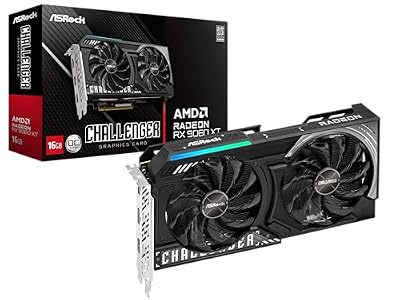
ASRock Radeon RX 9060 XT Challenger 16GB OC, RDNA 4, 3290MHz Boost, 16GB GDDR6 128-bit, PCIe 5.0, Dual Fans, 0dB Silent, LED Indicator, DisplayPort 2.1a, HDMI 2.1b
Included for 'Elden Ring Stuttering: Causes, Checks and Fixes' because the listing specifies RDNA 4 and 3290MHz Boost, details this guide uses to compare options.
View on AmazonWhat to do
Turn Hardware-accelerated GPU scheduling off and restart Windows. Play through an area you know well and compare the frame time graph. If it helps, leave it off; other games rarely miss it. If it makes no difference after a fair test, turn it back on.
How to undo it
Return to the same setting, turn it on and restart.
Fix 2: Turn Ray Tracing off
How to check
Open System, Graphics Settings, and scroll to Ray Tracing Quality. Even at Low it adds a large, uneven cost to frame time, and Elden Ring’s implementation is not well suited to holding the 60 FPS cap on mid-range hardware.
What to do
Set Ray Tracing Quality to Off. Set Shadow Quality and Global Illumination Quality to High rather than Maximum, since both scale poorly at the top tier. Leave Texture Quality at High or Maximum if you have 8 GB or more of VRAM.
How to undo it
Raise the settings again in the same menu.
Fix 3: Clear the shader cache after updates
How to check
If stutter is much worse than usual for several days after a game or driver update, and Steam shows shader pre-caching activity, the local cache is being rebuilt or has gone stale.
What to do
Close the game and Steam. Delete Steam\steamapps\shadercache\1245620. Clear %LOCALAPPDATA%\NVIDIA\DXCache or %LOCALAPPDATA%\AMD\DxCache. In Steam Settings, Downloads, make sure Shader Pre-Caching is enabled so Steam can supply precompiled shaders where available. Relaunch and spend a few minutes in a familiar area to warm the cache.
How to undo it
Nothing to revert.
Fix 4: Use Fullscreen and match the refresh rate
How to check
In System, Graphics Settings, look at Screen Mode. Borderless and Windowed route through the desktop compositor and add variance. Also check that your monitor’s refresh rate is a multiple of 60 or that adaptive sync is active.
What to do
Set Screen Mode to Fullscreen. On a 144 Hz or 165 Hz monitor without adaptive sync, set the refresh rate to 120 Hz in Windows display settings so the 60 FPS cap divides evenly; on G-Sync or FreeSync monitors, enable adaptive sync and leave the rate at maximum. Keep V-Sync on in game or use the driver’s V-Sync with the game’s off, but not both.
How to undo it
Return Screen Mode and refresh rate to their previous values.
Fix 5: Disable overlays and background applications
How to check
Elden Ring’s render thread has no slack because shader compilation already lives on it. Discord’s overlay, the Steam overlay, RivaTuner, the NVIDIA App overlay and Xbox Game Bar all add work at the worst moment.
What to do
Disable the Steam overlay for Elden Ring (game Properties), the Discord overlay, the NVIDIA in-game overlay and Game Bar, and close RivaTuner if you are not using its limiter. Close browsers. Test the same area again.
How to undo it
Re-enable each overlay you want back.
Fix 6: Match texture quality to VRAM
How to check
Watch Dedicated GPU memory in Task Manager in Leyndell or the Shadow Realm’s larger areas. If it sits at your card’s limit, the game is evicting and reloading textures, and each swap is a hitch that resembles shader stutter but does not fade with familiarity.
What to do
Set Texture Quality to High on 8 GB cards at 1440p, or Medium at 4K. Lower Effects Quality one step; many spell effects allocate VRAM on first cast.
How to undo it
Raise the settings in Graphics Settings.
Fix 7: Move the game to an SSD
How to check
Right-click Elden Ring in Steam, Properties, Installed Files, and note the drive. A hard drive causes long loads and pop-in that compound the shader hitching.
What to do
Use Steam’s Move Install Folder to relocate the game to an SSD, ideally NVMe. Keep several gigabytes free on the drive for shader and temporary files.
How to undo it
Move the install back.
Fix 8: Update or roll back the GPU driver
How to check
Elden Ring has hit driver regressions in both directions. If stutter worsened right after a driver install, the driver is the suspect; if you have not updated in months, the missing profile is.
What to do
Install the current driver with the clean installation option, then repeat Fix 3 because the change invalidates shaders. If the stutter worsened with the new driver, install the previous release and wait for the next.
How to undo it
Roll back through Device Manager or install the older package.
Fix 9: Reset GraphicsConfig.xml
How to check
If settings seem not to apply or performance is well below players with similar hardware, the XML may hold stale values.
What to do
Close the game. Rename %APPDATA%\EldenRing\<Steam ID>\GraphicsConfig.xml to .bak. Launch to regenerate defaults, then rebuild settings. Do not touch ER0000.sl2 in the same folder; it is your save file, and back it up regardless.
How to undo it
Delete the regenerated file and restore the backup.
If Nothing Works
Verify game files in Steam. Test a fresh Windows user account and a session with no third-party software running. Play in Offline Mode through the in-game Network settings to rule out network hitching from co-op and invasion traffic; if the stutter is much reduced offline, the connection rather than the renderer is the problem. Accept that some first-encounter hitching is inherent to how this engine compiles shaders and lessens with time in each region; the fixes above shrink it but nothing inside the rules removes it entirely. Mods that precompile shaders exist, but they require disabling Easy Anti-Cheat, which locks you out of online play and is not something this guide recommends.
FAQ
Why does Elden Ring stutter the first time I see something?
It compiles that object’s shader at that moment on the render thread. Repeat encounters in the same session are smooth, and the cache persists until the next update or driver change.
Does disabling HAGS hurt other games?
Rarely. Most titles show no measurable difference either way, so leaving it off for Elden Ring is low-risk.
Can I unlock the 60 FPS cap?
Not without third-party tools that disable Easy Anti-Cheat, which prevents online play. Adaptive sync at 60 FPS is the supported way to get smooth output.
Is Fullscreen really better than Borderless here?
Yes. Borderless adds compositor overhead and variance, and Elden Ring’s render thread has no slack to absorb it.