For most of the last decade the advice was simple: if you cared about audio quality and latency, you plugged in. In 2026 that advice no longer holds. Low-latency 2.4GHz radios, better onboard DACs, and batteries measured in days rather than hours have pushed wireless gaming headsets into territory that used to belong exclusively to cables. The price gap has narrowed too, to the point where cost alone rarely settles the argument.
Wired headsets haven’t disappeared, though, and they haven’t stopped making sense. They remain the cheapest route to a given level of driver quality, they never need charging, and they’re still the default in competitive environments where a dead battery mid-match is unacceptable. This guide breaks down where each option genuinely wins, and which type of player should choose which.
As an Amazon Associate we earn from qualifying purchases at no extra cost to you. Product prices and availability are accurate as of the date shown and are subject to change.




⚡ Save on Your Next PC — Amazon Prime
Prime members get fast free shipping on the systems above, plus early access to Prime Day & Black Friday PC deals. New members get a 30-day free trial.
Watch: Wireless vs Wired Gaming Headset in 2026 — Video Review
Quick Verdict
Go wireless if you play long sessions, switch between a console, PC and phone, and want a clean desk — the SteelSeries Arctis Nova 5 and Razer BlackShark V3 X HyperSpeed are the strongest all-round performers here, with the NUBWO and Ozeino models covering the budget end. Go wired if you want the most sound quality per dollar, zero maintenance, and absolute certainty about latency for competitive FPS, sim racing or fighting games.
Key Differences
- Latency: Wired is effectively instantaneous. Modern 2.4GHz wireless sits low enough that most players can’t detect it — NUBWO quotes 23ms sync, for example — but Bluetooth remains noticeably laggy for competitive play.
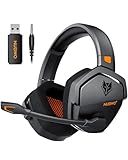
- Power and upkeep: Wired headsets never need charging. Wireless now runs from around 40 hours on the Ozeino to 60 hours on the Arctis Nova 5 and 100 hours on the NUBWO, but you still have to remember to plug it in.
- Audio per dollar: A wired headset spends its entire budget on drivers, padding and build. A wireless model at the same price splits that budget with a radio, battery and charging circuitry.
- Connectivity: Wireless wins outright. Multi-system models like the Arctis Nova 5 and the triple-mode NUBWO pair with PC, PS5, Switch and mobile, often letting you mix 2.4GHz game audio with a Bluetooth call.
- Freedom of movement: Console players sitting across a room, streamers who stand up mid-session, and anyone who has yanked a headset off their head by standing too quickly will feel this difference immediately.
- Long-term durability: Wired headsets have one common failure point — the cable — and it’s usually replaceable or repairable. Wireless headsets have batteries that degrade after a few years of daily charging.
Wireless Gaming Headsets
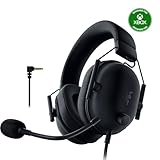
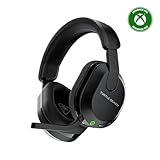
Wireless is now the default recommendation for most players, and the current lineup shows why. The SteelSeries Arctis Nova 5 pairs neodymium magnetic drivers with a large library of audio presets and a ClearCast Gen2.X mic, switching between 2.4GHz and Bluetooth across PC, PS5, PS4, Switch and mobile. The Razer BlackShark V3 X HyperSpeed takes the opposite approach — a lean, esports-focused design built around low-latency HyperSpeed wireless rather than feature count. For console-first buyers, the Turtle Beach Stealth 600 remains one of the few well-supported options that covers Xbox as well as PS5, PC and mobile.
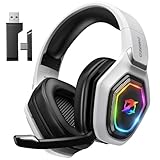
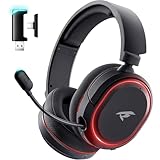
Battery anxiety is largely solved. The Ozeino headset advertises lossless audio with 40 hours of playback, while the NUBWO and the 7.1 surround sound model both push into 100-hour territory — enough for weeks of typical evening play between charges. The genuine compromises left are cost at the low end, where wireless budget models cut corners on padding and mic quality, and the battery itself, which will eventually hold less charge no matter how well you treat it.
Wired Gaming Headsets
A wired headset does one thing extremely well: deliver sound with no radio, no battery and no pairing. Spend the same money on wired as on wireless and you generally get better drivers, more substantial earcups and a sturdier frame, because none of the budget goes toward wireless hardware. For competitive players on 240Hz displays who are already trimming every millisecond from their setup, that certainty matters more than the convenience of cutting a cable.
Wired also stays reliable in crowded RF environments — LAN events, dorms, apartment blocks with dozens of Wi-Fi networks — where 2.4GHz can occasionally stutter. The trade-offs are real, though: you’re tethered to your desk or console, cables snag and wear out, and 3.5mm compatibility varies across modern devices. Many wireless headsets, including several listed above, can run on a cable in a pinch, which blunts the argument for going wired-only.
Which Should You Buy?
- For competitive FPS: Either works, but pick the Razer BlackShark V3 X HyperSpeed for a lightweight wireless option, or a wired esports headset if you refuse to think about latency at all.
- For multi-device players: Pick wireless — the SteelSeries Arctis Nova 5 or the triple-mode NUBWO handle PC, console and phone without re-cabling.
- For Xbox owners: Pick the Turtle Beach Stealth 600, since Xbox wireless support is the narrowest part of the market.
- For marathon sessions: Pick a 100-hour model like the NUBWO or the 7.1 surround headset, or go wired and stop thinking about it entirely.
- For the tightest budget: Pick wired if pure sound quality is the priority; pick the Ozeino if you want wireless freedom without overspending.
Frequently Asked Questions
Is wireless still slower than wired in 2026?
Technically yes, but the gap is measured in single-digit to low double-digit milliseconds on 2.4GHz. Below roughly 30ms, the vast majority of players cannot reliably detect the difference in blind testing. Bluetooth is a different story and should be treated as a convenience mode, not a gaming mode.
Do wireless headsets sound worse than wired at the same price?
Usually a little, especially under about the mid-range. The wireless components take a share of the budget that a wired headset spends on drivers and build. Above that point, the difference becomes small enough that features, comfort and mic quality matter more.
Can I use a wireless headset while it’s charging?
On most modern models, yes — they’ll either keep running over the 2.4GHz dongle while charging or switch to a USB wired mode. Check the specific model before buying if you plan to rely on this, as behaviour varies.
How long will the battery actually last over years of use?
Lithium-ion cells typically retain most of their capacity for two to three years of regular charging, then decline gradually. A headset rated at 100 hours new might deliver 70 to 80 after a few years, which is still comfortably more than most people need between charges.
Final Verdict
For most players in 2026, wireless is the right default: the latency argument has largely been settled, batteries have outgrown the problem, and multi-device flexibility is genuinely useful. Choose the SteelSeries Arctis Nova 5 for features, the Razer BlackShark V3 X HyperSpeed for competitive play, the Turtle Beach Stealth 600 for Xb