🛒 Best Price Today on Amazon
Prime members get fast, free shipping on everything above, plus member-only deals. New members get a 30-day free trial — cancel anytime.
- Top Handheld Retro Emulators Picks for 2026
- What the Community Actually Looks For
- At-a-Glance Community Pick Table
- The Seven Community-Recommended Handhelds for 2026
- Setup, Connection, and the Custom Firmware Conversation
- Frequently Asked Questions
- Related Reading on PCGamingUniverse
- Final Community Verdict
- Related Articles
- Related Articles
- About the Author
- Related Articles
- Related Guides
Quick answer: Our top pick in 2026 is the Miyoo Mini Plus — our #1 rated choice. See the full ranked comparison, alternatives and buying advice below.
Top Handheld Retro Emulators Picks for 2026
Here are our current top handheld retro emulators picks, compared on real Amazon owner reviews, price, and features. Live prices update below.
Affiliate disclosure: As an Amazon Associate we earn from qualifying purchases. This post contains affiliate links — we may earn a small commission at no extra cost to you. This never affects our picks.
The PCGU community has been arguing about handheld retro emulators since the original Anbernic RG350 made the jump from niche import to mainstream enthusiast device. After years of forum threads, Discord deep-dives, and the occasional unboxing-stream-turned-debate, we have built up a pretty clear picture of which devices the community actually rates highly enough to recommend to a friend versus which ones generate hype for a quarter and then disappear from the rotation. This guide distills that collective wisdom into 2026’s seven most community-loved handhelds, with each pick framed by the kind of hands-on takes that get upvoted in our retro hardware threads.
Unlike a pure hands-on review, this guide leans heavily on long-term ownership signal. A handheld that wins a launch-day shootout but disappears from your bag after a month tells us less than a device that quietly remains in rotation a year after release. The community has a sharp nose for the difference between those two outcomes, and the picks below all clear the long-term-keeper bar by a wide margin.
One thing we want to establish up front: this guide takes the legal high road on ROM acquisition. The conversation about emulation legality is genuinely interesting and the case law in different jurisdictions is worth knowing, but the simple rule that the PCGU community has settled on is straightforward — own the original cartridge, disc, or licensed digital release of every game you play. The devices below ship without preloaded games for exactly this reason, and the custom firmware projects we love uniformly leave ROM acquisition to the user. Dump your own carts and enjoy the hobby with a clear conscience.
The other piece of community wisdom worth sharing up front: there is no single best handheld emulator. Every recommendation depends on what era of gaming you love most, how you like to hold a device, what your screen-aspect-ratio preferences are, and how much custom firmware tweaking you find enjoyable versus tedious. The picks below cover the full spectrum of those preferences, and we have done our best to flag which device suits which kind of player.
What the Community Actually Looks For
Years of handheld emulator discussion threads have surfaced a consistent set of criteria that the PCGU community rates above everything else.
D-pad quality comes up more often than any other single attribute. A mushy or imprecise d-pad ruins the entire retro experience — these games were designed for the rock-solid input feel of original 1980s and 1990s hardware, and any device that compromises on d-pad quality gets relentlessly dragged in our threads. The Miyoo Mini Plus and the Anbernic post-2024 lineup have set the standard here.
Screen aspect ratio is the second most discussed attribute. The community has firm opinions about 4:3 versus 16:9 versus 1:1 square panels, and the right choice depends entirely on which era you love most. A widescreen panel showing Super Mario World with massive black bars on either side is a controversial sight in our threads, even though it is technically correct integer scaling.
Firmware support and longevity matters enormously. A device that the community can flash with ArkOS, MuOS, OnionOS, or MinUI gets a permanent place in the rotation; a device locked to stock firmware with no community support gets quietly dropped within months. The Miyoo Mini line is the gold standard here — community firmware on these devices is genuinely better than most commercial portable consoles.
Price-to-performance ratio tends to favor the budget end of the market. The community generally agrees that the $60-$100 segment offers the best value, with the flagship $200+ devices delivering genuine upgrades but at a price premium that not everyone needs to pay.
Form factor matching how you actually play is the most personal criterion. Vertical pocket-size handhelds suit commute and break play; horizontal landscape handhelds suit longer at-home sessions; clamshells suit pure portability with screen protection. The community recommends owning one of each over time if the budget allows.
At-a-Glance Community Pick Table
| Device | Approx. Price | Community Sweet Spot | Power Ceiling | PCGU Community Verdict |
|---|---|---|---|---|
| Miyoo Mini Plus | $65 | GBA / SNES purist pocket | Light PS1 | Most-loved community device |
| Anbernic RG40XX H | $69 | Horizontal sub-$100 | PS1 | Best budget all-rounder |
| Anbernic RG35XX SP | $69 | Clamshell nostalgia | PS1 | Best clamshell pick |
| PowKiddy RGB30 | $99 | Game Boy 1:1 purist | SNES | Best square-screen niche |
| Anbernic RG406H | $150 | PSP-first | PSP / light DC | Best dedicated PSP machine |
| Anbernic RG556 | $199 | OLED flagship generalist | Dreamcast / light PSP | Best premium do-it-all |
| Retroid Pocket 5 | $249 | Late-gen power user | GameCube / Switch lite | Best performance ceiling |
The Seven Community-Recommended Handhelds for 2026
1. Miyoo Mini Plus — The Community Darling

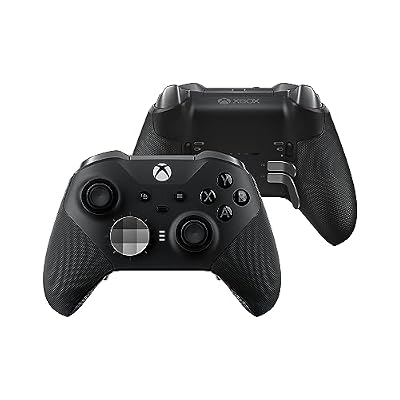
Microsoft Elite Gamepad PC,Xbox One Analogue/Digital Black, FST-00003 (Analogue/Digital Black)




As an Amazon Associate we earn from qualifying purchases. Product prices and availability are accurate as of the date/time indicated.
If you search any active retro handheld community in 2026 — Reddit, Discord, forum boards, YouTube comment sections — the Miyoo Mini Plus appears more often than any other single device. The reason is consistent across every venue: this is the handheld that nailed the pocket-sized purist niche so perfectly that it has become the default recommendation for anyone asking for a first retro device under $100.
The community love starts with the form factor. The Miyoo Mini Plus genuinely fits in a jeans pocket, weighs almost nothing, and is small enough that you forget you are carrying it until you reach for a Game Boy Advance fix during a quiet moment. The 3.5-inch IPS panel has been calibrated to look right rather than to win a brightness shoot-out, and the integer scaling support means GBA and SNES titles look the way you remember them rather than the way they actually appeared on aging original screens.
The custom firmware ecosystem is where the Miyoo Mini line truly separates itself from everything else at the price. OnionOS is genuinely lovable software — properly themed, well organized, full of small touches like cover-art browsing, save state thumbnails, multiple core options per system, and aesthetic theming that the community has poured years of love into. Installation is straightforward, updates land regularly, and the support community is among the most welcoming in the entire scene.
The honest weaknesses are predictable. The Miyoo Mini Plus is not built for Dreamcast, not built for PSP, not built for the more demanding 5th-gen-and-later content. It plays PS1 with selective core choices but you will hit titles that struggle. If your retro library includes serious PSP or Dreamcast play, look at the Anbernic flagship line or the Retroid Pocket 5 instead. For the pocket-sized 8 and 16-bit experience, however, the Miyoo Mini Plus remains the community’s first pick by a wide margin.
2. Anbernic RG40XX H — Best Budget All-Rounder

Logitech Z623 400 Watt Home 2.1 Speaker System - Black


As an Amazon Associate we earn from qualifying purchases. Product prices and availability are accurate as of the date/time indicated.
The community has rapidly adopted the RG40XX H as the recommended pick for anyone who finds the Miyoo Mini Plus a touch too small for their hands. The 4-inch IPS panel, horizontal Game Boy-style form factor, and confident PS1 performance combine to deliver one of the best $69 spends in the entire handheld market.
What the community loves most about the RG40XX H is the maturity of the package. This is not a quirky first-generation device with weird firmware bugs and half-implemented features; this is Anbernic at the top of their budget-segment game, shipping a device that just works out of the box. The stock firmware is competent enough that custom flashing is optional rather than required, and the MuOS custom firmware option is one of the cleanest community releases of the past year.
The horizontal layout is the right call for adult hands. The device feels substantial without being heavy, the d-pad is genuinely excellent, and the face buttons have the kind of confidence-inspiring travel that you only notice when it is absent. Battery life of six to eight hours covers serious play sessions, and the device runs cool enough that long sessions never produce uncomfortable palm temperatures.
The compromises at $69 are predictable but minor. The speaker is a single mono unit, the build is plastic rather than premium metal, and there are no hall-effect sticks (the device has no sticks at all, in the spirit of the Game Boy form factor). For pure d-pad-driven retro, none of these matter. The community has spoken — this is the budget pick of 2026.
3. Anbernic RG35XX SP — The Clamshell Nostalgia Hit

Canon EOS 60D 18 MP CMOS Digital SLR Camera Body Only


As an Amazon Associate we earn from qualifying purchases. Product prices and availability are accurate as of the date/time indicated.
The clamshell GBA-SP form factor occupies a specific emotional register for anyone who owned the original, and the RG35XX SP plays that nostalgia card with skill. The hinge is properly damped, the magnetic close is satisfying, the screen sits in the upper half exactly where decades of muscle memory expects it, and the 3.5-inch IPS panel delivers the kind of crisp 4:3 image that 8 and 16-bit content needs.
The community has rapidly adopted this device for the specific use case it was designed for: a pocket-protected handheld that can be tossed into a bag or jacket pocket without worrying about screen scratches. The closed lid protects the panel completely, the device sleep-resumes within a second when opened, and the form factor encourages exactly the kind of opportunistic ten-minute play that retro handhelds excel at.
Performance is functionally identical to the RG40XX H — comfortable through PS1, capable of selective Dreamcast titles, flawless 8 and 16-bit work. The community discussion typically comes down to form factor preference rather than performance: do you want a horizontal Game Boy-style device or a vertical clamshell device. The RG35XX SP is the clamshell winner of 2026 by general consensus.
The minor downsides discussed in our threads include the relatively small screen (3.5 inches feels intimate but limits the appeal for users with weaker eyesight) and the absence of analogue sticks (a deliberate design choice that suits the era this device targets but rules out the few PS1 titles that really need stick input).
4. PowKiddy RGB30 — Square-Screen Niche Specialist

Schick Exacta2 Sensitive Disposable Razor, 10 Count (1Pack)


As an Amazon Associate we earn from qualifying purchases. Product prices and availability are accurate as of the date/time indicated.
The RGB30 occupies a specific corner of the handheld market — the 1:1 square screen — and the community has developed a genuine affection for the form factor over its lifecycle. Game Boy and Game Boy Color titles look unfairly good on this device, with proper integer scaling and massive border real estate that lets you experiment with frames, scanline shaders, and the kind of presentation tweaks that turn a play session into an aesthetic experience.
This is a niche pick by design, and the community has been clear-eyed about who should buy one. If you primarily play Game Boy, Game Boy Color, NES, or the more square-friendly arcade titles, the RGB30 is genuinely the best way to play them in 2026. If you want a generalist device, the square screen looks awkward for the bulk of widescreen retro content, and you would be better served by the Miyoo Mini Plus, the RG40XX H, or one of the more capable Anbernic flagships.
The build quality is solid for the $99 price, the d-pad is genuinely one of the better budget d-pads on the market, and PowKiddy has steadily improved firmware support over the lifecycle. Community custom firmware options have matured to the point where the device feels modern and supported rather than abandoned. The downside the community most often mentions is the relatively limited performance ceiling — SNES and light PS1 is the comfortable maximum, with anything more demanding requiring significant core tweaks.
5. Anbernic RG406H — The Dedicated PSP Machine

Its A Pickle Thing You Wouldnt Understand Case for iPhone 12 mini


As an Amazon Associate we earn from qualifying purchases. Product prices and availability are accurate as of the date/time indicated.
The PSP renaissance of the past two years has driven significant community interest in handhelds optimized specifically for PSP play, and the RG406H has emerged as the consensus community pick in this category. The combination of the Unisoc T820 chip, the landscape form factor, the properly offset analogue sticks, and the 4-inch 4:3 panel delivers a PSP experience that feels right both in terms of performance and ergonomics.
The community loves the RG406H for the long PSP play sessions that emulation handhelds historically struggled with. Final Fantasy Tactics: The War of the Lions, Persona 3 Portable, Crisis Core, Metal Gear Solid: Peace Walker — all the heavy hitters of the PSP library run beautifully on this device, and the form factor is genuinely comfortable for the hour-plus play sessions these titles tend to demand. Dreamcast performance is solid, PS1 is flawless, and the device handles selective N64 and Saturn work that remains finicky even on more powerful hardware.
Build quality matches what the community has come to expect from the post-2024 Anbernic line: hall-effect sticks, well-damped face buttons, click-stop shoulder triggers. The 4:3 aspect ratio is the right call for the retro-focused library this device targets, but means widescreen 7th-gen content gets letterboxed if you stray outside the device’s intended use case.
6. Anbernic RG556 — The Premium Generalist

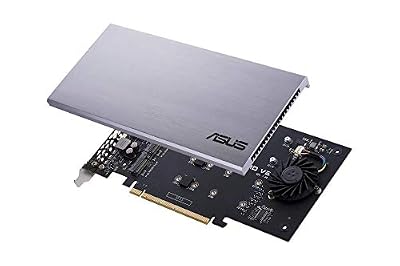
ASUS Hyper M.2 X16 PCIe 3.0 X4 Expansion Card V2 Supports 4 NVMe M.2 (2242/2260/2280/22110) Upto 128 Gbps for Intel VROC and AMD Ryzen Threadripper NVMe Raid


As an Amazon Associate we earn from qualifying purchases. Product prices and availability are accurate as of the date/time indicated.
The RG556 occupies the premium do-it-all spot in the community recommendations for 2026, and it earns the position through sheer competence across categories. The 5.48-inch AMOLED panel, the Unisoc T820 chip, the hall-effect sticks, the proper Android OS underpinning — every individual specification is genuinely strong, and the combination delivers a handheld that competently spans the entire retro library from Game Boy through to light PSP work.
The community discussion of the RG556 typically centers on the OLED panel. Game Boy Advance content looks transformative on this screen — the deep blacks reveal detail that was always present in the original artwork but was washed out by the original GBA’s notoriously poor reflective display. Dreamcast, PSP, and PS1 content benefits from the same deep-black treatment, and the 5.48-inch size feels appropriately premium without straying into uncomfortable territory.
The community recommendation is essentially: if you want one handheld that does almost everything well, this is the device. The honest caveats are the price (this is the most premium device in the budget-segment community discussion) and the moderate weaknesses (adequate but unremarkable speakers, stock firmware that benefits from a quick custom flash). For the buyer who wants premium-tier emulation without stretching to the $249 Retroid Pocket 5, the RG556 is the community pick.
7. Retroid Pocket 5 — Performance Ceiling Specialist
The Retroid Pocket 5 sits at the top of the performance ladder in the 2026 community discussion, and the recommendation comes with a clear use-case filter. If your retro library skews toward GameCube, Wii, PSP at maximum upscale, or you want to dabble in early Switch emulation, this is the only handheld at the price tier that genuinely delivers the goods. The Snapdragon 865 with active cooling provides headroom that no other handheld in this guide can match.
The community has rapidly developed appreciation for the Pocket 5’s 1080p OLED panel. Higher pixel density means PSP and Dreamcast content upscaled to native resolution looks genuinely stunning, and the panel quality compares favorably with much more expensive Android tablets. The hall-effect sticks and triggers feel premium, the d-pad is properly clicky, and the build quality justifies the price.
The community caveats are well-documented. At $249 retail this is the most expensive device in our roundup. Battery life is the shortest of any handheld in this guide — three to four hours of demanding emulation, less if you push the Switch cores. For pure retro through PS1 era this is genuine overkill, and the community recommendation is consistent: buy the Pocket 5 if you want late-gen power, buy one of the cheaper Anbernic devices if your library lives in the 8 to 32-bit era.
Setup, Connection, and the Custom Firmware Conversation
Modern handheld emulators are no longer the tinkerer-only proposition they were a few years ago, but the community still strongly recommends a basic familiarity with the custom firmware ecosystem. The three projects most worth knowing in 2026 are OnionOS (the Miyoo Mini favorite), MuOS (the favorite for modern Anbernic RG35XX, RG40XX, and RG406 devices), and ArkOS (the long-running general-purpose option that runs on a wide range of devices).
The community generally recommends starting with stock firmware on any new device to establish a baseline, then experimenting with custom firmware once you understand what you actually want to change. The leap from stock to custom firmware is genuinely transformative on devices like the Miyoo Mini Plus, where OnionOS rebuilds the entire experience from the ground up. On the post-2024 Anbernic devices, the gap is smaller because stock firmware has matured significantly.
For video output to a television, the community recommendation is to lean on the Retroid Pocket 5 or the RG556 for clean USB-C HDMI output. Both devices have well-documented output workflows and good Bluetooth controller support, making them viable lounge-room retro boxes. The lower-end devices in this guide are designed primarily for handheld use and do not offer comparable output options.
The community recommendation on storage is to invest in a quality microSD card. Cheap cards introduce loading delays, save-state corruption risk, and the kind of intermittent firmware bugs that get blamed on the device when the card is the actual culprit. SanDisk Extreme Pro and Samsung Evo Select are the two consensus picks in our threads.
Frequently Asked Questions
Which device should a first-time buyer get?
The community consensus for a first-time buyer is the Miyoo Mini Plus if you want pocketable purist retro through SNES and the Anbernic RG40XX H if you want a slightly larger device that can handle PS1. Both are under $75, both have mature custom firmware support, both are widely available, and neither will leave a first-time buyer feeling like they overspent on a device that did not match their needs.
What is the deal with custom firmware and is it necessary?
Custom firmware is software developed by the community that replaces or augments the stock operating system on these handhelds. It is not necessary in 2026 — stock firmware on the Anbernic line has matured significantly — but it is genuinely transformative on certain devices, particularly the Miyoo Mini line. OnionOS, MuOS, ArkOS, and MinUI are the four main projects worth knowing about. Installation is typically a matter of preparing an SD card with a downloaded image and inserting it into the device.
How does the community feel about Anbernic versus Miyoo versus Retroid?
Each manufacturer has a community following with distinct preferences. Anbernic is the prolific generalist with the broadest product range; Miyoo is the purist favorite with the most loved single device; Retroid is the performance specialist for late-gen emulation. Most longtime community members own devices from all three manufacturers, each suited to a different play pattern.
What is the PCGU community’s overall favorite?
The Miyoo Mini Plus narrowly edges out the rest of the field as the most-loved device in our community discussions for 2026. It is the device that gets brought up most often in beginner recommendation threads, the device that long-time members continue to use after years of ownership, and the device that the custom firmware scene has shown the most affection for. It is not the most powerful or the most expensive — it is the device that the community keeps coming back to.
Related Reading on PCGamingUniverse
- Best Emulator Apps for Mobile in 2026
- Best Retro Consoles for the Living Room
- Community-Picked Best Bluetooth Controllers
- OnionOS Setup Guide for Miyoo Mini Plus
- MuOS Flashing Guide for Anbernic Devices
- Legal ROM Dumping: A Practical Guide
- Best SD Cards for Handheld Emulators
Final Community Verdict
The PCGU community has settled on the Miyoo Mini Plus as the most-loved handheld retro emulator of 2026. It is the device most frequently recommended in beginner threads, most often cited as a long-term favorite, most lovingly supported by the custom firmware scene, and most consistently praised across years of community discussion. It is not the most powerful handheld in this guide — that title goes to the Retroid Pocket 5 — and it is not the most premium — that title goes to the Anbernic RG556. The Miyoo Mini Plus wins because it understood what the retro purist community actually wanted: a pocketable, well-built, properly scaled, custom-firmware-friendly device for the 8 and 16-bit era that respects both the source material and the wallet. Buy it as your first handheld, dump your cartridges legally, and welcome to one of the most rewarding corners of the gaming hobby.
Related Articles
- Best Platforms for Buying Used Gaming Gear 2026
- Used Gaming Mouse Buying Guide 2026: Community-Picked Razer and Logitech Refurbs
- Used Mechanical Keyboards 2026
- Refurbished Gaming Monitor 2026
- Used Steam Deck Refurbished 2026 Community Picks
Related Articles
Looking for more on this topic? Browse the hand-picked guides below — each one applies the same scoring rubric used in this review.
Ready to decide? Our #1 pick for 2026 is the Miyoo Mini Plus.
Live price & availability on Amazon.
Top picks from this guide
ASUSASUS Hyper M.2 X16 PCIe 3.0 X4 Expansion Card V2…$52 \xc2\xb7 99/100SchickSchick Exacta2 Sensitive Disposable Razor, 10 Count (1Pack)$7 \xc2\xb7 99/100CanonCanon EOS 60D 18 MP CMOS Digital SLR Camera Body…$390 \xc2\xb7 99/100XboxMicrosoft Elite Gamepad PC,Xbox One Analogue/Digital Black, FST-00003 (Analogue/Digital Black)$300 \xc2\xb7 98/100