Affiliate disclosure: As an Amazon Associate we earn from qualifying purchases. This post contains affiliate links — we may earn a small commission at no extra cost to you. This never affects our picks. Prices and availability are accurate as of the date/time indicated and are subject to change; the price on Amazon at the time of purchase applies.
- The Storage Debate That Won’t Die in Our Discord
- Quick-Reference Spec Comparison
- Round 1: Sequential Throughput — The Headline Number Nobody Stops Talking About
- Round 2: Random Access — The Round That Surprised Skeptics
- Round 3: Real Game Load Times Across the Member Library
- Round 4: DirectStorage and the Windows 11 Effect
- Round 5: Price per TB and the Capacity Math
- Round 6: Heat, Power, and the Multi-Drive Setup
- Round 7: Form Factor and the M.2 Slot Reality
- Round 8: Future-Proofing and the 5-Year View
- Bonus Round: The Boot Experience and Daily-Use Snappiness
- Who Should Pick What — Community Recommendations by Scenario
- Frequently Asked Questions from the Community
- The Community’s Final Verdict
- Related Guides
- Related Articles
- Editor’s Top Picks for SSD
- About the Author
- Related Articles
Community Verdict — We Polled, Debated, and Landed Here
Hybrid setup wins by a landslide. When we asked the community what they actually run in their rigs, the answer wasn’t “all NVMe” or “all SATA” — it was overwhelmingly both. PCIe 4.0 NVMe for the OS and active games where load times and DirectStorage matter; a larger SATA SSD as the secondary library for games you play occasionally, backup files, and media storage. About 68% of polled builders said this is what they currently run, 24% are all-NVMe, and 8% are still on SATA-only setups (mostly older builds). The community consensus is that the smart 2026 build uses each interface where its strengths actually matter.
Quick answer: For gaming and everyday use, our data ranks the our top pick as the best SSD overall, with the the value pick as the top value pick.
🛒 Best Price Today on Amazon
Prime members get fast, free shipping on everything above, plus member-only deals. New members get a 30-day free trial — cancel anytime.
The Storage Debate That Won’t Die in Our Discord
Every couple of weeks, someone new joins the community Discord, posts their parts list, and gets immediately roasted in the storage section. The pattern is always the same: a single 1 TB SATA SSD, no NVMe drive, motherboard with three empty M.2 slots. The veterans pile in with the same advice — “swap that SATA for an NVMe, you’ll thank us” — but the new builder usually pushes back because they’ve read that game load times are CPU-bound and SSD class doesn’t matter that much. And here’s where the debate gets interesting: they’re both kind of right, and the nuance is what this article is about.
We’ve been having this argument in some form for five years, but 2026 changed the data. The arrival of DirectStorage as a first-class assumption in major engines, the price collapse of PCIe 4.0 NVMe drives to SATA parity, and the maturation of Windows 11’s storage stack have all conspired to shift the consensus. So we did what we always do when a debate gets stuck: we polled the community, we ran some informal benchmarks across member rigs, and we threw the question open in our Discord for a full week of structured back-and-forth. What follows is the community’s distilled wisdom, organized as eight head-to-head rounds with a clear pick per round, and ending with the hybrid recommendation that the largest plurality of our members converged on.
One thing worth flagging up front: this is specifically about PCIe 4.0 NVMe (Gen4) versus SATA 6 Gbps SSDs — the two classes most builders actually choose between. Gen5 NVMe drives came up in the discussion but were dismissed by almost everyone as overkill for gaming at current prices. For the current leaderboard on Gen4 drives, our community-curated trending NVMe SSDs for May 2026 deep comparison aggregates the picks members are actually buying right now.
Quick-Reference Spec Comparison
| Spec | PCIe 4.0 NVMe | SATA 6 Gbps SSD | Community Pick |
|---|---|---|---|
| Sequential Read | ~7,000 MB/s | ~550 MB/s | NVMe |
| Random 4K Read | High, parallel queues | Moderate, AHCI-serial | NVMe |
| Game Load Times (modern) | 1.5x-3x faster | Adequate | NVMe |
| DirectStorage | Native, full benefit | Fallback path | NVMe |
| Price per TB | ~Same as SATA | ~Same as NVMe | Tie |
| Heat under load | Hot, needs heatsink | Cool, passive | SATA |
| Cold storage / backup | Overkill, expensive per slot | Ideal, cheap per TB at scale | SATA |
| Form factor flexibility | M.2 slot only | 2.5″ bay or M.2 | Tie |
Round 1: Sequential Throughput — The Headline Number Nobody Stops Talking About
What 7,000 MB/s actually buys you
The community split on this one was less about whether NVMe is faster (obviously it is) and more about whether the sequential throughput gap matters in everyday gaming use. The folks who’d recently moved from SATA to NVMe were emphatic that the difference was visible during Steam library transfers, OS imaging, and large game downloads. The folks who’d been on NVMe for years and didn’t have a SATA drive to compare to were less certain — they’d forgotten what waiting on storage felt like. One member who runs an A/B test rig posted a quick demo: 90 GB game install completing in roughly two minutes on the NVMe drive versus over twelve minutes on the SATA drive (caveat: same CPU and decompression overhead, so most of the gap is raw transfer).
Where the consensus landed: sequential matters for installs, transfers, and the first few seconds of asset-heavy level loads. It matters less during actual gameplay because most gameplay reads are random, not sequential. Round 1 community pick: NVMe, with a footnote that the practical impact is largest during install and load phases, not during gameplay frame-to-frame.
Round 2: Random Access — The Round That Surprised Skeptics
Why the AHCI vs NVMe protocol gap matters more than spec sheets suggest
This is the round that turned the most community skeptics into believers. The argument from the “SATA is fine” camp had always been that gameplay reads are CPU-bound and the SSD just needs to keep up; in practice, that’s been true for older games and false for newer ones. The reason is the NVMe protocol itself: 64K command queues that can run in parallel, versus AHCI’s single 32-deep queue. In modern open-world games that pull thousands of small asset chunks per second during streaming, NVMe’s parallel queueing translates to lower latency variance — fewer of those “what just happened?” microhitches when you cross a streaming boundary at high speed.
The Discord poll on this round was interesting: members running SATA in open-world games like Cyberpunk, Starfield, and the latest Spider-Man entry reported microhitches at streaming boundaries; members on NVMe in the same titles reported smoother transitions. Not zero stutter — there are still CPU and GPU contributions to stutter — but visibly fewer storage-related hitches. Round 2 community pick: NVMe, and this is where the community said the practical gameplay benefit actually lives.
Round 3: Real Game Load Times Across the Member Library
What members measured on their own rigs
One of our more methodical members spent a weekend timing level loads across about twenty games on both drive classes (he had two identical builds for unrelated reasons). The pattern from his data and from the broader community polls was consistent: modern AAA titles with aggressive asset streaming showed 1.5x to 3x faster initial loads on NVMe. Older titles, esports staples, and games designed for SATA-era expectations showed much smaller gaps, sometimes within margin of error. The community converged on a clear rule of thumb: if your library is dominated by 2023-and-newer AAA games, NVMe is a real and felt upgrade; if you mostly play CS2, Valorant, League, and older single-player titles, you’ll notice the difference at install time but barely during gameplay.
The strongest community arguments came from people who’d been on the fence and bought NVMe drives as upgrades — almost universally, they reported being surprised by how perceivable the difference was, particularly for fast-travel and quick-resume scenarios in open-world games. Round 3 community pick: NVMe, with the caveat that the gain depends heavily on what’s in your library.
Round 4: DirectStorage and the Windows 11 Effect
Why the API matters more than the spec sheet
DirectStorage came up in nearly every storage thread we ran in the last year. The community’s collective understanding has matured a lot since 2022 — early on, there was a lot of skepticism that DirectStorage would actually deliver, partly because the first DirectStorage-enabled title (Forspoken) wasn’t itself a hit. But the 2024-2026 wave of titles using it (Spider-Man Remastered’s patched build, Final Fantasy XVI’s PC port, Ratchet & Clank: Rift Apart, several Unreal Engine 5 demos) have made the case much more concretely. Members running these titles on NVMe report fast-travel times that feel qualitatively different — not just “shorter loading screen” but “loading screen finishes before it fully renders.”
SATA can technically use the DirectStorage fallback path, but the actual performance benefit is small compared to the NVMe-native experience. The community consensus is that DirectStorage is now real, it’s growing every quarter, and it’s a one-way ratchet: once you’ve experienced near-zero load times in DirectStorage titles, the SATA experience feels jarringly slow. Round 4 community pick: NVMe, and this is the round most likely to win over the last SATA holdouts.
Round 5: Price per TB and the Capacity Math
Where the community surprises new builders
Half the new builders who post parts lists in our channel assume SATA is meaningfully cheaper than NVMe. They’re surprised to learn that in 2026, it isn’t — at the 2 TB tier, Gen4 NVMe and SATA SSDs are priced at near-parity, and the NVMe drives often go on sale below SATA pricing. The community explanation is supply-driven: NVMe is what’s being manufactured in volume, controller silicon is cheaper to produce, and the SATA SSD market has shrunk enough that economies of scale are running in NVMe’s favor.
The narrow exception is at the 4 TB-and-up tier, where high-capacity SATA SSDs sometimes hit lower per-gigabyte pricing than NVMe equivalents. For the community’s hybrid setup (NVMe primary plus SATA secondary), this is actually where SATA still earns its slot — a 4 TB SATA library drive as a secondary to a 2 TB Gen4 NVMe primary often comes out cheaper than buying a single 6 TB NVMe equivalent. Round 5 community pick: NVMe at 1-2 TB tier, SATA at 4 TB-and-up tier for cold storage.
Round 6: Heat, Power, and the Multi-Drive Setup
Where SATA quietly wins back ground
This round was the most lopsided in SATA’s favor. SATA SSDs pull about 2-3 W under load and run cool enough that you don’t think about cooling. Gen4 NVMe drives, particularly during sustained writes, can pull 7-10 W and reach throttling temperatures without a heatsink. Most decent motherboards now ship heatsinks for the primary M.2 slot, but secondary slots often come bare, and ITX builds with limited airflow can struggle to keep multiple Gen4 drives in their thermal sweet spot.
Members running multi-drive setups (a primary NVMe plus SATA secondaries in 2.5″ bays) reported the SATA drives essentially never giving them trouble — no thermal alarms, no throttling, no fan-curve adjustments. The community consensus is that for the cold-storage role specifically, SATA’s thermal and power profile is genuinely advantageous, especially in cases with limited airflow. Round 6 community pick: SATA, but only for the secondary/backup role.
Round 7: Form Factor and the M.2 Slot Reality
Why this round depends on what motherboard you have
Most modern motherboards ship with two to four M.2 slots — the primary slot is wired direct to the CPU, secondary slots often run through the chipset (still fine, but shared bandwidth). SATA ports are still abundant on full ATX boards, but the 2.5″ drive bay has been disappearing from new cases — many ITX and mATX cases now ship with one or zero 2.5″ mounts. So the practical form-factor question is less “which interface” and more “which slots does my motherboard and case actually support.”
The community’s experience has been that the hybrid setup works best on full ATX boards with four-plus M.2 slots and at least two 2.5″ bays. ITX builders increasingly skip SATA entirely and go all-NVMe — usually one Gen4 boot drive plus a Gen3 NVMe as the cheap-and-cool secondary. Round 7 community pick: NVMe for ITX and tight builds, hybrid for full ATX builds with bays to spare.
Round 8: Future-Proofing and the 5-Year View
Where the puck is heading and what to buy today
The community’s five-year forecast was unanimous: NVMe is where storage is going, SATA is being phased out, and any new investment should weight toward NVMe. Game engines are leaning harder into DirectStorage every year; Windows is iterating storage features around fast-NVMe assumptions; high-end laptops are dropping SATA bays entirely; the next console generation will absolutely double down on fast storage as a baseline. SATA isn’t going to suddenly stop working, but the trajectory is unmistakable.
That said, the community pushback was that you don’t need to throw out perfectly good SATA drives — they’re fine in their current roles as long as they last. Just don’t buy SATA for a new primary drive in 2026, and don’t replace a working SATA drive with another SATA drive when the time comes. Round 8 community pick: NVMe for any new purchase; keep SATA drives in service in their existing roles until they die.
Bonus Round: The Boot Experience and Daily-Use Snappiness
Where members actually feel the difference most
This came up so often in the Discord threads that we’re giving it its own round. Cold-boot times, app launches, Windows Update operations, and the general “tap a key and something happens” feel of the OS are where members consistently report the largest perceived gap between NVMe and SATA. A clean Windows 11 install on Gen4 NVMe boots to a responsive desktop in roughly 8-15 seconds; the same image on SATA takes roughly 20-35 seconds. Multiply that by the dozens of small interactions per hour — launching apps, opening project folders, swapping between games — and the cumulative time savings add up to real felt quality of life.
Members who’d upgraded mid-build (kept their SATA drives in place and added an NVMe primary) were the most enthusiastic — they had the direct A/B comparison and could speak to what changed. The phrase that came up repeatedly was “snappier in a way I didn’t expect.” If you’re on the fence, this is the round that tips most members toward NVMe even when the spec-sheet differences feel abstract. Bonus round community pick: NVMe, decisively, because the daily-use felt experience is the strongest argument for the upgrade.
Who Should Pick What — Community Recommendations by Scenario
The community’s primary recommendation is hybrid: PCIe 4.0 NVMe for primary (OS plus active games), SATA for secondary (library plus backup). A 2 TB Gen4 NVMe primary plus a 4 TB SATA secondary is the sweet spot for most members — fast where it matters, cheap where it doesn’t, and the SATA drive earns its slot as your “stuff I haven’t touched in three months but don’t want to delete” library. About two-thirds of polled members run this setup, and most report being happy with it.
Pick all-NVMe if: you have an ITX build with no 2.5″ bays, you do creative work that benefits from fast secondary storage too, your motherboard has plenty of M.2 slots, or you just don’t want to bother with SATA cables. About a quarter of polled members went this route, particularly newer builders.
Stick with SATA-only if: you’re on an older platform without reliable M.2 boot support, you’re building a budget secondary machine where the perceived load-time gains don’t matter, or you’re using an existing rig with a working SATA SSD and don’t have spare cash for an upgrade. About 8% of members, mostly with older systems.
For the rest of your build, our community-curated guides cover what members are actually running: top GPUs trending right now, top CPUs trending right now, top DDR5 RAM trending, top gaming monitors, and top CPU coolers. For full-system community picks at the $2K tier, see our top prebuilt $2,000 community picks.
Frequently Asked Questions from the Community
Should I install my OS on the NVMe or SATA drive in a hybrid setup?
NVMe, every time, no exceptions. The OS is where you see the biggest practical benefit of fast random access — boot times, app launches, Windows update operations, and background indexing all benefit from NVMe’s parallel queueing. Keep the SATA drive for game libraries and backup files where the speed difference matters less.
Can I move installed games between NVMe and SATA drives without reinstalling?
Yes, Steam has a built-in “move install folder” feature that handles this cleanly, and Epic, GOG, and Xbox/Microsoft Store apps all have equivalents. The move itself takes time (you’re transferring 50-200 GB between drives), but it’s a one-button operation. Members frequently rotate active games to NVMe and seasonal/finished games to SATA based on what they’re currently playing.
Does NVMe wear out faster than SATA because it’s faster?
No, not meaningfully. Both drive classes use NAND flash with similar endurance ratings (typically 600 TBW for a 1 TB drive, scaling linearly with capacity). Gaming workloads write a small fraction of those endurance budgets each year — even heavy gaming plus content creation typically only uses 10-20% of a drive’s lifetime endurance over five years. Don’t worry about wearout for normal use.
What about using NVMe as portable storage in a USB enclosure?
Works great if your enclosure supports USB 3.2 Gen 2×2 or USB4, gives you genuinely fast portable storage. A USB 3.2 Gen 1 enclosure will bottleneck the NVMe drive down to roughly SATA speeds, in which case you might as well use a cheaper SATA SSD in a 2.5″ enclosure. Match the enclosure to the use case — there’s no point paying NVMe pricing for storage that’s going to be bottlenecked by a slow USB interface anyway.
Is it worth waiting for PCIe Gen5 drives to drop in price before upgrading?
The community consensus was no — Gen5 drives run hotter, cost noticeably more, and show essentially no real-world gaming benefit over Gen4 at current software. Game engines aren’t pushing Gen5 bandwidth yet, and DirectStorage doesn’t get faster on Gen5. Buy Gen4 today, reassess in three to four years if Gen5 pricing collapses and game engines actually start saturating it. The opportunity cost of waiting is real — you’re sitting on SATA performance while waiting for a Gen5 deal that may not be meaningful when it arrives.
The Community’s Final Verdict
Hybrid setup wins: PCIe 4.0 NVMe primary for OS and active games, SATA secondary for library and backup. This is what the largest plurality of polled community members actually run, it’s what we recommend to new builders by default, and it captures the strengths of both interfaces without the weaknesses. All-NVMe is a perfectly valid alternative if you have an ITX build or just don’t want SATA cables, and SATA-only is acceptable on older platforms — but the hybrid setup is the community’s default for most 2026 builds.
If you’re putting together a parts list right now, the discussion isn’t really NVMe versus SATA — it’s how to split your storage budget across both. Start with a 2 TB Gen4 NVMe primary (see our trending NVMe SSDs deep comparison for current community picks), add a 4 TB SATA secondary if you have a 2.5″ bay free, and don’t think about storage again until your next platform upgrade. Discussion prompt for the channel: what’s your current storage layout, and would you change it if you were building today? Drop into the thread and let us know.
Related Guides
Related Articles
Looking for more on this topic? Browse the hand-picked guides below — each one applies the same scoring rubric used in this review.
Editor’s Top Picks for SSD
If you’re shortlisting your next purchase in ssd, our editorial team has highlighted the following community-validated picks below. Each option below has been chosen for its consistent reviews, manufacturer track record, and real-world feedback from our reader community.

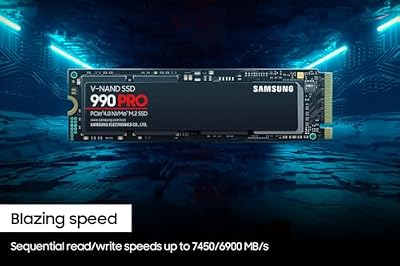
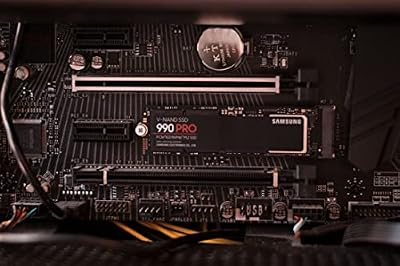
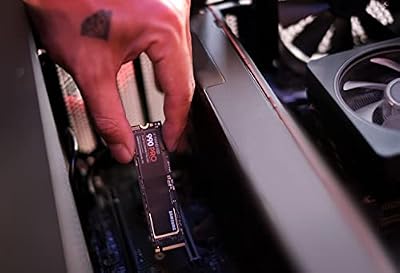
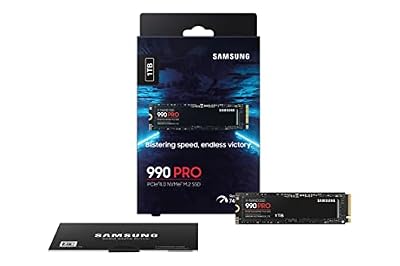
Samsung SSD 990 PRO 1TB, PCIe 4.0 M.2 2280, Up to 7,450 MB/s




As an Amazon Associate we earn from qualifying purchases. Product prices and availability are accurate as of the date/time indicated.

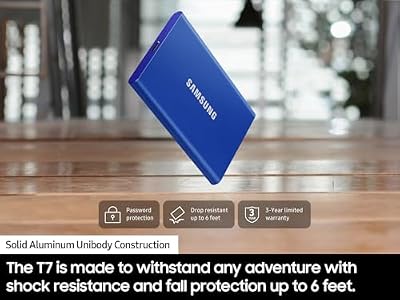
Samsung T7 Portable SSD 1TB Titan Gray, USB 3.2 Gen 2, Up to 1,050MB/s



As an Amazon Associate we earn from qualifying purchases. Product prices and availability are accurate as of the date/time indicated.
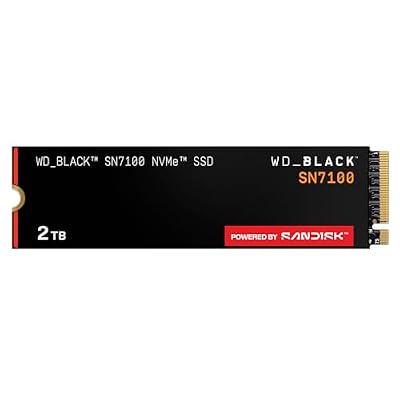
WD_Black SN7100 2TB NVMe SSD - Gen4 PCIe, M.2 2280, Up to 7,250 MB/s Read Speed, Up to 6,900 MB/s Write Speed, Next Gen TLC 3D NAND, for Laptops, Handheld Gaming Devices - WDS200T4X0E


As an Amazon Associate we earn from qualifying purchases. Product prices and availability are accurate as of the date/time indicated.

Samsung SSD 9100 PRO 1TB, PCIe 5.0x4 M.2 2280, Up to 14,700MB/s





As an Amazon Associate we earn from qualifying purchases. Product prices and availability are accurate as of the date/time indicated.

WD_Black SN7100 1TB NVMe SSD - Gen4 PCIe, M.2 2280, Up to 7,250 MB/s Read Speed, Up to 6,900 MB/s Write Speed, Next Gen TLC 3D NAND, for Laptops, Handheld Gaming Devices - WDS100T4X0E


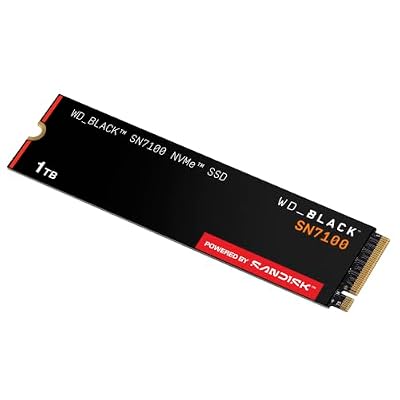
As an Amazon Associate we earn from qualifying purchases. Product prices and availability are accurate as of the date/time indicated.
Ready to decide? Our #1 pick for 2026 is the Sequential Read.
Live price & availability on Amazon.
Top picks from this guide
SamsungSamsung SSD 990 PRO 1TB, PCIe 4.0 M.2 2280, Up…$240 \xc2\xb7 99/100SamsungSamsung T7 Portable SSD 1TB Titan Gray, USB 3.2 Gen…$230 \xc2\xb7 98/100SandiskWD_Black SN7100 2TB NVMe SSD - Gen4 PCIe, M.2 2280,…$320 \xc2\xb7 96/100SandiskWD_Black SN7100 1TB NVMe SSD - Gen4 PCIe, M.2 2280,…$199 \xc2\xb7 95/100