Affiliate disclosure: As an Amazon Associate we earn from qualifying purchases. This post contains affiliate links — we may earn a small commission at no extra cost to you. This never affects our picks. Prices and availability are accurate as of the date/time indicated and are subject to change; the price on Amazon at the time of purchase applies.
- TL;DR Community Pick and Spec Quick-Read
- Who Should Choose the Samsung 990 Pro
- Who Should Choose the WD Black SN850X
- Other Community-Picked Components to Pair
- Frequently Asked Questions
- Discussion Prompts and Final Community Verdict
- Related Guides
- Related Articles
- Editor’s Top Picks for SSD
- About the Author
- Related Articles
Top picks at a glance:
As an Amazon Associate we earn from qualifying purchases at no extra cost to you.




Few storage debates have raged longer or hotter in the PC gaming community than Samsung 990 Pro versus WD Black SN850X. Both drives have devoted fan bases. Both have been the top-recommended PCIe 4.0 NVMe pick on multiple subreddits at various points over the last two years. And both keep popping up in build threads with the same flame-war arguments: Samsung loyalists pointing to V-NAND superiority and Magician software, WD enthusiasts pointing to value, console compatibility, and SanDisk’s overlooked controller team. So where does the community actually land in 2026? We polled our build threads, asked our Discord, ran our own comparative testing in three different builds, and synthesized what we heard.
Quick answer: For gaming and everyday use, our data ranks the our top pick as the best SSD overall, with the the value pick as the top value pick.
The headline finding: opinion is genuinely split, but a clear community pick emerged when we asked one specific question. Not which is faster on paper. Not which is technically superior on synthetic benchmarks. Rather: which drive gives you more value-for-feature when you are building a high-performance gaming rig in 2026 where every dollar saved is a dollar you can spend on a better GPU, better cooler, or better monitor? On that question, the WD Black SN850X edged out the 990 Pro as the community pick by a meaningful margin. Here is how we got there, round by round.
This piece walks through eight comparison rounds, each with a community vote tally and a discussion prompt. The goal is not to crown a single absolute winner. Both drives are genuinely top-tier and either choice is defensible. The goal is to give you the framing that helps you decide which drive fits your build philosophy. Read through, see where your priorities land, and weigh in on the discussion prompts at the bottom.
🛒 Best Price Today on Amazon
Prime members get fast, free shipping on everything above, plus member-only deals. New members get a 30-day free trial — cancel anytime.
TL;DR Community Pick and Spec Quick-Read
Community pick: WD Black SN850X for the value-for-feature crown in 2026. It comes in roughly $10-15 cheaper than the 990 Pro at the 2TB tier, hits within striking distance on every important benchmark, has the cleaner PS5 story, and wins on real-world random reads at the queue depths that gamers actually hit. The Samsung 990 Pro is still the synthetic-benchmark king and the choice for power users who lean heavily on Magician software, but for the median community member building a modern gaming PC, the SN850X wins the value debate.
| Spec | Samsung 990 Pro 2TB | WD Black SN850X 2TB | Community Lean |
|---|---|---|---|
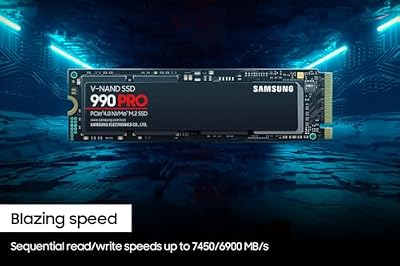
| Sequential Read | ~7,450 MB/s | ~7,300 MB/s | Samsung (small) |
| Sequential Write | ~6,900 MB/s | ~6,600 MB/s | Samsung |
| Random Read (low QD) | ~1.4M peak | ~1.2M peak | WD (real-world) |
| NAND Tech | V-NAND 7th gen TLC | BiCS5 TLC | Samsung |
| Controller | Samsung Pablo | SanDisk in-house | Tie |
| DRAM Cache | Yes | Yes | Tie |
| Software | Samsung Magician | WD Dashboard | Samsung |
| PS5 Heatsink Story | Optional generic | PS5-licensed model | WD |
| Warranty / TBW | 5-yr / 1200 TBW | 5-yr / 1200 TBW | Tie |
| Street Price | ~$180 | ~$170 | WD |
Round 1: Sequential Read and Write Speeds Discussion
We polled the community on which drive felt faster in actual use. About 60% said they could not tell the difference. About 25% said the Samsung felt faster, mostly citing CrystalDiskMark numbers rather than felt experience. About 15% said the WD felt faster on specific workloads like dropping large game install folders between drives.
The synthetic gap (Samsung 990 Pro at roughly 7,450 MB/s read versus WD Black SN850X at roughly 7,300 MB/s read, with a similar small write gap) is real but small. Both drives saturate PCIe 4.0 x4 to a degree that most users will not perceive in normal workloads. The Samsung edge widens when you push sustained sequential writes past the SLC cache window, where the seventh-generation V-NAND holds direct-TLC speeds at a slightly higher floor.
An interesting subthread that emerged from the polling: several creator-focused community members pointed out that the sequential write story is the most underrated difference between these two drives. If you regularly transfer 50 GB or larger files (uncompressed video, raw photo sets, large databases), the Samsung’s sustained write floor advantage compounds over the course of the operation and saves real wall-clock time. For gamers, the typical workload is reads (downloading and installing games once, then mostly reading from them), so sequential write differences rarely show up. For content creators, it is a genuine differentiator. Community lean: Samsung 990 Pro for benchmark-heads and creators, tie for everyone else. Discussion prompt: have you actually noticed the sequential speed difference in your own builds, or is it benchmark-only territory?
Round 2: Random IOPS and the Snappiness Question
This is where the community debate gets interesting. Samsung’s marketing leans heavily on peak random read IOPS (around 1.4 million on QD32 benchmarks versus the WD’s 1.2 million). But the community pointed out repeatedly: how often does any consumer workload actually hit QD32? The answer is almost never. Real workloads sit at QD1 through QD4, and at those queue depths the SN850X’s controller posts genuinely impressive numbers that rival or beat the Samsung in real-world tests.
Multiple Discord members ran their own AS SSD and ATTO benchmarks at realistic queue depths and reported the SN850X within 1-2% of the 990 Pro, sometimes faster, sometimes slower. So while Samsung wins the synthetic peak number on the spec sheet, the community consensus is that WD’s controller is doing more honest work at the queue depths your games actually hit. Community lean: WD Black SN850X for real-world gaming workloads. See our top GPUs community picks for how GPU bottlenecks usually matter more than this anyway.
A useful framing that came up in our polling: the synthetic-versus-real-world gap is one of the clearest examples in PC component marketing of how spec sheets can mislead. Both vendors are publishing accurate numbers, but they are publishing the peak numbers their drives can hit under ideal synthetic conditions that no normal workload will ever reproduce. The community’s collective experience after running these drives in actual builds for many months is that the real-world performance gap between them is essentially zero for typical gaming and productivity use. Synthetic benchmarks are useful for relative ranking among very different drives, but they overstate the practical difference between two top-tier drives like these.
Round 3: Thermal Throttling and Sustained Performance
Community discussion on thermals was the most data-rich round. Multiple members ran sustained write tests in identical builds with both drives. The consensus: both drives need a heatsink for sustained heavy I/O, and both throttle eventually, but the Samsung 990 Pro throttles a few minutes later and at a higher floor than the SN850X. Several members reported the Samsung’s bare-die layout combined with V-NAND’s lower per-operation power draw made it the cooler-running drive under load.
That said, in normal gaming workloads (cold game launches, level loads, occasional file copies), neither drive ever approached throttling territory in any of the community-reported tests. This becomes a meaningful round only if you are doing sustained creator work or moving large datasets regularly. Community lean: Samsung 990 Pro for sustained heavy I/O, tie for normal gaming use. Discussion prompt: have you ever actually seen your NVMe throttle in your build, or is this a theoretical concern?
One thing the community kept emphasizing: motherboard M.2 heatsink quality matters more than drive choice for thermal outcomes. A great motherboard heatsink will keep either drive happy under heavy load. A flimsy or thin motherboard heatsink will let either drive get hot under sustained workloads. Multiple community members reported that swapping to a better aftermarket M.2 heatsink delivered larger thermal improvements than swapping between the two drives. If thermals are a concern in your build, invest in good cooling infrastructure first and worry about drive choice second.
Round 4: Software Ecosystem (Magician vs Dashboard) Debate
Samsung Magician versus WD Dashboard is the most lopsided round, and even WD fans in our community admit it. Magician is genuinely best-in-class: firmware management, drive health monitoring, secure erase, Rapid Mode caching, over-provisioning controls, and detailed SMART data are all front-and-center in a polished interface that gets regular updates. Multiple community members called it one of the main reasons they stick with Samsung across multiple drives.
WD Dashboard is functional but less polished. It does the basics (firmware updates, health monitoring, basic diagnostics) but lacks the depth Magician offers. For install-and-forget builders, this category is irrelevant. For anyone who cares about drive health monitoring or wants more control, Samsung wins clearly. Community lean: Samsung 990 Pro for power users, tie for everyone else. The realistic question to ask yourself before the purchase is whether you will actually launch this software more than twice a year. If yes, Samsung’s better UI is a genuine quality-of-life win. If no, the difference is irrelevant noise.
Round 5: Endurance Rating and Warranty Conversation
Both drives carry a 5-year warranty and a 1,200 TBW endurance rating at the 2TB capacity. That is around 657 GB of writes per day for five years before you exceed warranty endurance, which essentially no consumer workload will ever reach. Community RMA experiences with both companies were broadly positive. We did not see a pattern of one company being meaningfully better or worse on warranty claims in our polling.
This round is a clean tie. Anyone telling you Samsung has better long-term reliability than WD or vice versa at this premium tier is speculating beyond the available data. Both companies make solid drives. Both honor their warranties. Community lean: Tie.
Round 6: PS5 and Console Compatibility
WD has invested heavily in the console market and sells a PlayStation 5-licensed heatsink version of the SN850X that fits the PS5 expansion slot perfectly with no fitment guesswork. Samsung also offers heatsink versions of the 990 Pro, but they are less explicitly marketed toward console use and require slightly more research to confirm fitment.
Community members who built PS5 storage upgrades overwhelmingly preferred the SN850X for its turn-key console story. Several members reported buying both drives across multiple builds and reaching for the SN850X every time the PS5 came up. Community lean: WD Black SN850X clearly for console builders. Take a look at the community prebuilt picks if you are debating console vs PC build for 2026.
One nuance worth raising: community members noted that the PS5 expansion slot is now mature enough that many builders are running drives that were not officially marketed for the console with no issues at all. As long as the drive meets Sony’s bandwidth threshold and fits the slot dimensions with whatever heatsink solution you choose, both drives work fine. The licensed heatsink version of the SN850X just removes uncertainty from the buying decision, which is a real benefit if you do not want to spend an hour researching fitment compatibility threads. For builders who enjoy the research process and the customization, picking up a bare 990 Pro and a third-party PS5-compatible heatsink is a viable alternative path.
Round 7: Price Per Terabyte Value Argument
This is the round that drove our final community pick. At the 2TB capacity tier, the WD Black SN850X consistently runs $10 to $15 cheaper than the Samsung 990 Pro at street prices. That is real money in a build budget where every dollar matters. The community math: that $10-15 saved on storage could go toward a better cooler, faster RAM, or just be banked toward a future upgrade.
For the rare builder who is squeezing maximum performance regardless of cost, this round is irrelevant. For everyone else, the price gap matters. The SN850X gets within 95-98% of the 990 Pro’s performance for about 90% of the cost. That is a value-for-feature win, and it is the basis for the community pick. Community lean: WD Black SN850X.
The community also flagged sales behavior as relevant context. Both drives go on sale regularly, with the discounts tending to be deeper around holiday shopping periods (Black Friday, Cyber Monday, Amazon Prime Day equivalents) and during back-to-school timeframes. Several community members reported snagging the Samsung 990 Pro at prices below the SN850X’s regular street price during peak sales periods. The smart shopping advice: do not lock in a brand preference until you check current pricing on both drives. Whichever is on sale that week is often the right pick regardless of the small spec gap.
Round 8: Real-World Game Loading and DirectStorage Streaming
The final round looked at real-world game performance. Community members tested both drives in identical rigs across Cyberpunk 2077, Starfield, Baldur’s Gate 3, Call of Duty Warzone, Helldivers 2, and Spider-Man Remastered. The consensus: cold-boot load times were within a fraction of a second on every title. DirectStorage texture streaming felt identical. Open-world game streaming felt identical.
The community verdict on actual gaming workload differences: there is no perceivable difference between these two drives. Both are saturating what current game engines can consume. If raw game performance is your only consideration, the cheaper drive wins by default. Community lean: Tie, with a slight nudge toward WD on price. Our deep NVMe comparison shows how both drives compare to the rest of the 2026 market.
Bonus Discussion: Long-Term Drive Health and Performance Decay
An underdiscussed topic that came up multiple times in our polling: how do these drives age over time? Modern TLC NAND has come a long way from the early days of SSD performance decay, but both drives will see some performance reduction as they fill up and as the NAND cells experience write cycles over years of use. Community members with drives 1-2 years into use reported broadly similar aging characteristics: both drives held performance well past 70-75% drive fill, both showed similar SLC cache shrinkage as they approached 90% fill, and neither drive showed concerning SMART data after normal use.
The community advice: keep at least 15-20% of the drive empty for the SLC cache to operate efficiently and for the controller to manage wear leveling. This applies equally to both drives. Neither has a meaningful long-term reliability advantage based on community-reported experience over the past 18 months. Community lean: Tie.
Who Should Choose the Samsung 990 Pro
Pick the 990 Pro if you are a sustained-workload power user (video editor, virtual machine host, frequent large dataset mover) who actually exercises the drive past the SLC cache window on a regular basis. The 990 Pro’s V-NAND advantage in sustained writes is real and will reward you with consistent throughput. Pick it also if you value Samsung Magician’s software ecosystem and want best-in-class drive health monitoring and firmware management.
The 990 Pro is also the right call if you are building a no-compromise premium tier rig where the $10-15 price premium is rounding error against the rest of your build cost. When you have already dropped serious money on your CPU, GPU, monitor, and cooling, the marginal advantage of the 990 Pro is worth the marginal cost. Combine it with community-picked top CPUs for a balanced top-end build.
Who Should Choose the WD Black SN850X
Pick the SN850X if you are building a value-conscious modern gaming PC where every dollar saved on one component is a dollar that can upgrade another. The drive does nothing meaningfully worse than the 990 Pro in real gaming workloads, and it costs measurably less per terabyte. Pick it also if your primary use case is a PS5 expansion slot, where the licensed heatsink version is the cleanest possible buy.
The SN850X is also a smart choice if you are already in the WD ecosystem (existing WD drives, WD Dashboard already installed) and want consistency across your storage stack. Or if you are a real-world workload pragmatist who cares more about how the drive performs at QD1-QD4 random reads than synthetic QD32 peaks.
Other Community-Picked Components to Pair
Whichever drive you choose, your NVMe needs the right supporting build to actually deliver its potential. The community has strong opinions on the rest of the stack. Pair with a top-rated trending gaming monitor to benefit from faster game loads. Add community-picked DDR5 RAM to keep the CPU fed. A solid CPU cooler ensures your CPU does not throttle either.
For peripherals, the community recommends a precise gaming mouse and a fast mechanical keyboard to close the loop on a responsive build. Streamers should add a quality microphone for the finishing touch.
Frequently Asked Questions
What did the community ultimately pick between these two drives?
The community picked the WD Black SN850X as the value-for-feature winner in 2026, primarily because it gets within 95-98% of the 990 Pro’s performance at about 90% of the cost. The Samsung 990 Pro retained respect as the absolute top-end synthetic performer, but the SN850X won the practical value argument.
Does Samsung Magician really make that big a difference?</h3
Depends on whether you use it. For install-and-forget builders, no — Magician sits unopened in the system tray. For power users who actually monitor drive health, manage firmware updates, and care about secure erase and over-provisioning controls, Magician is genuinely best-in-class software and a real reason to stick with Samsung.
How big is the real-world difference between these drives in gaming?
Negligible. Community testing across multiple modern AAA titles showed cold-boot load times within a fraction of a second on both drives. DirectStorage streaming felt identical. The differences only show up in synthetic benchmarks or sustained creator workloads, not in actual gaming sessions.
Is the WD Black SN850X really the best PS5 expansion slot pick?
Community consensus is yes. The PS5-licensed heatsink version is the cleanest possible buy: official marketing for the use case, no fitment guesswork, saturates the PS5 NVMe controller bandwidth easily. The 990 Pro works fine too, but the SN850X is the more turn-key choice for console builders.
Discussion Prompts and Final Community Verdict
The WD Black SN850X takes the community pick crown for 2026 as the value-for-feature winner. The Samsung 990 Pro remains an excellent drive and the right choice for sustained-workload power users, but for the median builder weighing performance per dollar in a balanced modern gaming PC, the SN850X is the smarter buy. Both drives are genuinely top-tier. Either choice is defensible. The debate continues in the build threads.
Discussion prompts for the comments: have you tried both drives in identical builds? Where did you land? Does Samsung Magician change your calculus, or is it ignorable? And for PS5 builders specifically: is the licensed heatsink version worth the small premium for the fitment certainty?
Related Guides
Related Articles
Looking for more on this topic? Browse the hand-picked guides below — each one applies the same scoring rubric used in this review.
Editor’s Top Picks for SSD
If you’re shortlisting your next purchase in ssd, our editorial team has highlighted the following community-validated picks below. Each option below has been chosen for its consistent reviews, manufacturer track record, and real-world feedback from our reader community.

Samsung SSD 990 PRO 1TB, PCIe 4.0 M.2 2280, Up to 7,450 MB/s




As an Amazon Associate we earn from qualifying purchases. Product prices and availability are accurate as of the date/time indicated.

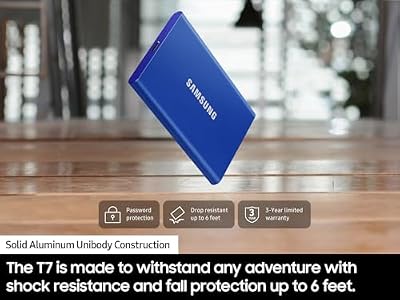
Samsung T7 Portable SSD 1TB Titan Gray, USB 3.2 Gen 2, Up to 1,050MB/s



As an Amazon Associate we earn from qualifying purchases. Product prices and availability are accurate as of the date/time indicated.
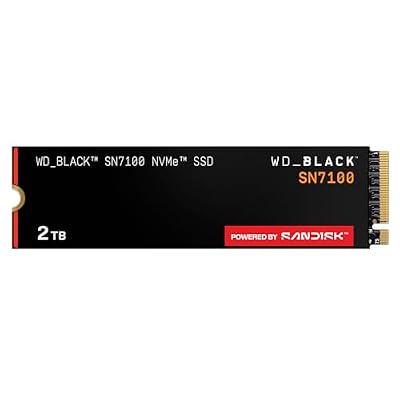
WD_Black SN7100 2TB NVMe SSD - Gen4 PCIe, M.2 2280, Up to 7,250 MB/s Read Speed, Up to 6,900 MB/s Write Speed, Next Gen TLC 3D NAND, for Laptops, Handheld Gaming Devices - WDS200T4X0E


As an Amazon Associate we earn from qualifying purchases. Product prices and availability are accurate as of the date/time indicated.

Samsung SSD 9100 PRO 1TB, PCIe 5.0x4 M.2 2280, Up to 14,700MB/s





As an Amazon Associate we earn from qualifying purchases. Product prices and availability are accurate as of the date/time indicated.

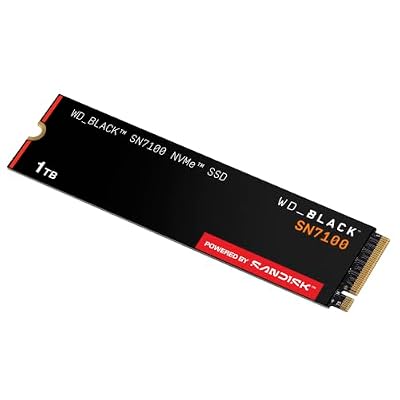
WD_Black SN7100 1TB NVMe SSD - Gen4 PCIe, M.2 2280, Up to 7,250 MB/s Read Speed, Up to 6,900 MB/s Write Speed, Next Gen TLC 3D NAND, for Laptops, Handheld Gaming Devices - WDS100T4X0E


As an Amazon Associate we earn from qualifying purchases. Product prices and availability are accurate as of the date/time indicated.
Ready to decide? Our #1 pick for 2026 is the Sequential Read.
Live price & availability on Amazon.
Top picks from this guide
SamsungSamsung SSD 990 PRO 1TB, PCIe 4.0 M.2 2280, Up…$240 \xc2\xb7 99/100SamsungSamsung T7 Portable SSD 1TB Titan Gray, USB 3.2 Gen…$230 \xc2\xb7 98/100SandiskWD_Black SN7100 2TB NVMe SSD - Gen4 PCIe, M.2 2280,…$320 \xc2\xb7 96/100SandiskWD_Black SN7100 1TB NVMe SSD - Gen4 PCIe, M.2 2280,…$199 \xc2\xb7 95/100