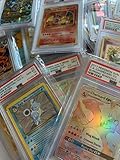
- Top Pick: One Random PSA Graded and Authenticated Encased Pokemon Card (Perfect for Display)
- Best Value: Pokemon TCG: 1x Random Graded Pokemon Card (Beckett, PSA or CGC) – Grade 8 or Higher (English or Japanese)
- Premium Choice: One (1x) Sealed Random Mana Grade 10 PSA Stackable Graded Encased Card (Perfect for Display) ONLY Hits (Compatible with Pokemon)
Pulling a shiny chase card is exciting, but a raw card sitting in a sleeve is worth a fraction of the same card sealed in a graded slab with a high number on the label. The problem is that the grading world has grown from one dominant company into a crowded field of graders, each with its own scale, slab design and turnaround reality. This guide walks through every legitimate option, how submissions actually work, and which cards are worth the postage in the first place.
As an Amazon Associate I earn from qualifying purchases.
🛒 Best Price Today on Amazon
Prime members get fast, free shipping on everything above, plus member-only deals. New members get a 30-day free trial — cancel anytime.
Where to Get Pokemon Cards Graded: The Short Answer
You send Pokemon cards to a third-party grading company, and the four that the hobby actually recognises are PSA, Beckett (BGS), CGC Cards and SGC. You can submit directly through each company’s website by creating an account, filling in an online submission form and mailing the cards yourself, or you can hand the cards to an authorised dealer or local card shop that runs group submissions on your behalf. PSA is the default for Pokemon because collectors and buyers pay the biggest premium for a PSA 10, while Beckett and CGC appeal to people who want subgrades. Newer options such as TAG and Ace Grading exist and are gaining ground, but resale liquidity still favours the established names.
| Game | Platform | Genre | Why It’s Great | Rating |
|---|---|---|---|---|
| Pokemon Scarlet & Violet | Nintendo Switch | Open-world RPG | First fully open-world mainline Pokemon, with three story paths you can tackle in any order | 8.0/10 |
| Pokemon Legends: Arceus | Nintendo Switch | Action RPG | Real-time catching and stealth mechanics that finally made the act of catching feel like a game | 9.0/10 |
| Pokemon Sword & Shield | Nintendo Switch | RPG | Wild Area co-op raids and two strong expansion campaigns | 8.0/10 |
| Pokemon Brilliant Diamond & Shining Pearl | Nintendo Switch | RPG | Faithful Sinnoh remakes with the Grand Underground rebuilt for modern hardware | 7.5/10 |
| Pokemon Trading Card Game | Game Boy Color | Card battler | The classic TCG rules taught through a charming single-player campaign | 8.5/10 |
| Pokemon TCG Pocket | Mobile | Digital card collecting | Two free packs a day and immersive card art make digital collecting genuinely fun | 8.0/10 |
| Slay the Spire | PC, Switch, PS, Xbox | Deckbuilding roguelike | The gold standard for card-based strategy and endlessly replayable runs | 9.5/10 |
| Marvel Snap | PC, Mobile | Card battler | Three-minute matches and a collection system built around cosmetic upgrades | 8.5/10 |
PSA: The Default Answer for Where to Get Pokemon Cards Graded
Professional Sports Authenticator is the largest grader in the hobby and the one whose slabs command the strongest resale premium for Pokemon. PSA uses a whole-number scale from 1 to 10, with a 10 labelled Gem Mint, and it does not print subgrades on the label, so the card is judged holistically on centering, corners, edges and surface. Submitting means registering a free collectors club account, choosing a service level based on the card’s declared value, printing the submission form and shipping the cards in penny sleeves and semi-rigid holders. PSA also runs on-site intake at major card shows and collector conventions, which is the fastest way to skip a mailing leg. Its public population report is a big part of the appeal: buyers can see exactly how many copies of a card exist at each grade.
CGC Cards and Beckett: Subgrades and Slab Quality
Beckett Grading Services is the veteran alternative and the home of the Black Label 10, awarded only when a card earns a perfect 10 in all four subgrades. Those subgrades are the point of BGS, because they tell a buyer exactly why a card fell short. CGC Cards, an offshoot of the long-established comic grader, has become a serious competitor with a well-regarded slab, clear subgrade breakdowns and a Pristine 10 tier that sits above the standard Gem Mint 10. Both accept direct submissions through their websites and both are popular for Japanese Pokemon cards. If you plan to sell into the English vintage market, remember that a PSA 9 will often outsell a numerically identical grade from a smaller company simply because more buyers trust the label.
SGC, TAG and Ace Grading: The Alternatives Worth Knowing
SGC built its reputation on vintage sports cards and its distinctive black-matted slab, and it has become a favourite for older cards because of its consistency and quick turnaround. TAG Grading takes a different approach entirely, using computer vision to scan cards and produce a detailed digital report with a numerical breakdown of every flaw it detects, which appeals to collectors who distrust subjective human eyes. Ace Grading serves the UK and European market and saves overseas collectors a painful international shipping round trip. These companies are legitimate, but resale value is a popularity contest, so treat them as options for personal collection pieces rather than cards you intend to flip. Between long grading sessions, a comfortable setup helps, and our gaming chair buying guide covers the seating worth owning.
Card Shops, Card Shows and Group Submissions
If the paperwork sounds tedious, your local card shop is often the easiest place to start. Many shops hold authorised dealer status with one or more graders and run regular group submissions, handling the forms, packaging and insured shipping for a service fee on top of the grading tier. This is genuinely useful for beginners because a good shop owner will tell you honestly when a card is not worth submitting. Card shows are the other shortcut: the major graders staff booths where you can hand cards over in person, and some offer same-show express tiers. Whichever route you take, insist on a written itemised list of every card handed over, with declared values recorded.
What Grading Costs, How Long It Takes and How Tiers Work
Every grader prices by service level, and the level you qualify for depends on the card’s declared market value plus how fast you want it back. Bulk tiers are the cheapest per card but require minimum quantities and can take months during busy periods; express and walk-through tiers are dramatically faster and dramatically more expensive. Declared value matters because it sets the insurance liability, and deliberately under-declaring a valuable card to sneak into a cheap tier can get a submission bumped or rejected. Budget for return shipping and insurance too, which is charged separately. Turnaround times published on grading websites are estimates that move with hobby demand, so check the current posted windows before you commit. A second screen makes tracking submissions easier, and our gaming monitor buying guide explains panel types worth paying for.
Which Pokemon Cards Are Actually Worth Grading
Grading only makes financial sense when the graded copy sells for meaningfully more than the raw card plus fees. In practice that means vintage Wizards of the Coast era cards, especially 1st Edition and Shadowless Base Set, holographic rares from the original sets, modern alternate-art and special illustration rare chase cards, error cards, and sealed-era promos with genuine scarcity. Common bulk from recent sets is almost never worth it. Before submitting, inspect each card under a bright angled light for surface scratches, whitening on the back edges and off-centre borders, because centering alone kills more potential 10s than anything else. If you would not confidently call a card near-perfect with a loupe, expect a 9 at best.
Packing and Shipping Cards Safely
Grading companies reject or damage-note cards that arrive bent, so packing properly is not optional. Put each card in a fresh penny sleeve, then a semi-rigid holder such as a Card Saver, and never use a top loader for submissions because graders find them harder to remove cards from safely. Bundle the holders with a rubber band, wrap them in bubble wrap, and use a rigid box rather than a padded envelope. Include the printed submission form, use a tracked and insured service, and photograph every card front and back before it leaves your hands. Keep those photos until the slabs come back so you can prove condition if anything goes wrong. If you stream unboxings, our streaming microphone buying guide and gaming webcam buying guide cover the capture gear worth buying, while a gaming headset buying guide helps with monitoring audio and a gaming mouse buying guide covers precision editing work.
Frequently Asked Questions
How long does Pokemon card grading take?
Turnaround depends entirely on the service tier you pay for. Bulk and economy submissions frequently take several months during peak demand, mid-tier services usually land within a few weeks, and express or walk-through options at card shows can return slabs in days. Always check the grader’s currently posted estimates rather than older figures.
Is PSA still the best place to get Pokemon cards graded?
For resale value, yes. PSA slabs consistently sell for more than numerically equal grades from competitors because the buyer base is larger and the population report is the reference collectors use. Beckett and CGC are excellent choices if you value subgrades, Japanese card expertise or slab aesthetics over maximum liquidity.
Can I get Pokemon cards graded locally instead of mailing them?
Often yes. Many card shops are authorised dealers that bundle customer cards into group submissions, handling forms, packaging and insured shipping for a fee. The major graders also staff booths at large card shows where you can hand cards over in person, sometimes with express same-show grading available.
Which Pokemon cards should I not bother grading?
Skip modern commons, uncommons, bulk reverse holos and any card with visible whitening, scratches or poor centering. If the raw card sells for less than the combined grading, shipping and insurance cost, grading destroys value rather than creating it. Grade vintage holos, 1st Edition cards, error cards and modern alternate-art chase pulls instead.
As an Amazon Associate we earn from qualifying purchases at no extra cost to you.