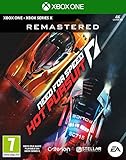
- Top Pick: Need For Speed: Hot Pursuit Remastered – Xbox One
- Best Value: Need for Speed: Underground 2 – Xbox
- Premium Choice: NEED FOR SPEED THE RUN L.E.
Need for Speed games in order begin with The Need for Speed in 1994 and run through more than twenty-five mainline entries to Need for Speed Unbound in 2022. Because there is no continuing story between most games, release order is the only order that matters — and it maps neatly onto four distinct phases: the sim-flavoured 1990s, the tuner-culture Black Box years, the Criterion arcade revival, and the modern Ghost Games and Criterion era.
As an Amazon Associate I earn from qualifying purchases.
🛒 Best Price Today on Amazon
Prime members get fast, free shipping on everything above, plus member-only deals. New members get a 30-day free trial — cancel anytime.
The Best Need for Speed Games to Start With
| Game | Platform | Genre | Why It’s Great | Rating |
|---|---|---|---|---|
| Need for Speed: Most Wanted (2005) | PC, Xbox 360, PS2, GameCube | Open-world racing | The blacklist structure and police pursuits have never been topped | 9.2/10 |
| Need for Speed: Underground 2 | PC, PS2, Xbox, GameCube | Street racing | The deepest customisation in the series and a perfect night-time mood | 8.8/10 |
| Need for Speed: Hot Pursuit (2010) | PC, PS4, Xbox One, Switch | Arcade racing | Criterion’s Autolog turned every race into a friend rivalry | 8.9/10 |
| Need for Speed: Heat | PC, PS4, Xbox One | Open-world racing | Day and night split gives risk and reward real structure | 8.0/10 |
| Need for Speed Unbound | PC, PS5, Xbox Series X|S | Open-world racing | Cel-shaded art style and the best handling model in years | 7.9/10 |
| Need for Speed III: Hot Pursuit | PC, PS1 | Arcade racing | Introduced playable cops and defined the series’ identity | 8.6/10 |
| Need for Speed: Porsche Unleashed | PC, PS1 | Simulation racing | Fifty years of Porsche history in a single loving package | 8.5/10 |
| Need for Speed: Rivals | PC, PS4, Xbox One | Open-world racing | Seamless cop-versus-racer multiplayer with no lobbies | 8.0/10 |
The 1990s: Simulation Roots (1994–2000)
The Need for Speed arrived on the 3DO in 1994 and hit PC and PlayStation the following year. It was built around licensed exotics, real-road environments and magazine-style car dossiers, with a handling model far closer to simulation than anything the series would produce later.
Need for Speed II (1997) leaned into fantasy supercars. Need for Speed III: Hot Pursuit (1998) is the pivotal one — it added playable police, pursuit modes and spike strips, establishing the cops-and-racers identity that still defines the brand. High Stakes (1999), released as Road Challenge in Europe, introduced car damage and pink-slip wagers. Porsche Unleashed (2000) then went the opposite direction: a single-manufacturer game covering five decades of Porsche engineering, and still the most respected entry among sim fans. A precise wheel transforms these older games; see our guide to the best racing wheels for PC.
The Transition and Motor City Online (2001–2002)
Motor City Online (2001) is the odd one out — a subscription-based hot-rod MMO that shut down in 2003 and is frequently forgotten in Need for Speed lists entirely. Then Need for Speed: Hot Pursuit 2 (2002) split into two genuinely different games: an EA Seattle version for PC, GameCube and Xbox, and a separate Black Box version for PlayStation 2. The PS2 build is the better-regarded one and marked Black Box’s first work on the series. Both versions run well on modern hardware today; see the best gaming headsets for immersion if you want the engine notes to land properly.
The Black Box Golden Age (2003–2008)
This is the run most fans mean when they talk about classic Need for Speed. Underground (2003) abandoned exotics for import tuners, night-time city streets and heavy visual customisation, riding the wave of street-racing culture. Underground 2 (2004) added a free-roam city, body-kit layering and a hydraulics-and-neon toybox that no later entry has matched.
Most Wanted (2005) fused the tuner customisation with the police chases from Hot Pursuit and wrapped it in the Blacklist — fifteen rivals to beat, each with escalating heat levels. It remains the series’ commercial and critical peak. Carbon (2006) added canyon duels and crews, ProStreet (2007) pivoted to sanctioned track events with brutal damage modelling, and Undercover (2008) closed the era on a low note with performance problems and a widely mocked live-action story. Chasing frame rate in these older titles is easy on modern hardware — our picks for the best budget graphics cards cover cards that run them at high refresh rates.
The Fragmented Years (2009–2026)
2009 produced three Need for Speed games at once. Shift, developed by Slightly Mad Studios, was a serious circuit-racing sim with a cockpit-focused presentation. Nitro was a stylised Wii and DS exclusive aimed at younger players. World was a free-to-play online game reusing the Most Wanted and Carbon maps, which ran until 2015.
Then Criterion Games — the Burnout studio — delivered Need for Speed: Hot Pursuit (2010), a full reinvention with an emphasis on exotic cars, sweeping countryside roads and the Autolog system that pushed your friends’ times into your face constantly. 2011 gave us Shift 2: Unleashed and The Run, the latter a linear coast-to-coast race with on-foot quick-time sequences that did not land well.
The Criterion and Ghost Games Era (2026–2026)
Criterion’s Most Wanted (2012) shares only a name with the 2005 game — it is an open-world reworking of Burnout Paradise’s design with no customisation and instantly drivable cars scattered around the map. Divisive, but excellent on its own terms.
Rivals (2013) launched with the PS4 and Xbox One, introducing AllDrive to blend single-player and multiplayer seamlessly. The 2015 reboot, simply titled Need for Speed, brought back deep customisation and night-only street racing but shipped requiring an always-online connection. Payback (2017) added a heist story and a poorly received card-based upgrade system. Heat (2019) fixed most of that, splitting the game into legal daytime events and illegal night races where your winnings are at risk if the police catch you. Long open-world sessions are far better with a fast display; see the best high refresh rate gaming monitors.
Hot Pursuit Remastered and Unbound (2026–Present)
Need for Speed: Hot Pursuit Remastered (2020) brought Criterion’s 2010 game to modern platforms with all DLC included and cross-platform multiplayer, which is exactly what a remaster should be. Ghost Games was folded into EA Gothenburg the same year and moved to a support role, handing full development back to Criterion.
Need for Speed Unbound (2022) is the most recent mainline entry, notable for its striking cel-shaded effects layered over realistic car models, a genuinely improved handling model, and a betting-based progression loop in the story mode. It received substantial free content volumes after launch. If you play on console, the best controllers for racing games compares pads with the analogue trigger precision that matters here.
Which Order Should You Actually Play Them In?
There is no narrative continuity to preserve, so play what appeals. For a newcomer, the practical order is: start with Hot Pursuit Remastered because it is modern, cheap and instantly fun; move to Heat for the open-world customisation loop; then Unbound for the newest handling; then go back for Most Wanted 2005 and Underground 2 to understand why the series is loved.
Skip Undercover and The Run unless you are completing the set. And be aware that several older PC entries need community patches to run properly on modern Windows. Storage speed matters for the newest entries’ streaming worlds — check the best NVMe SSDs for gaming for drives that keep pop-in under control.
Frequently Asked Questions About Need for Speed Games in Order
How many Need for Speed games are there in order?
There are more than twenty-five mainline releases plus numerous mobile, handheld and free-to-play spin-offs, bringing the total franchise count above thirty depending on how you count regional variants. The mainline series spans from 1994 to 2022, making it one of the longest-running racing franchises in gaming.
Do I need to play the Need for Speed games in order?
No. Almost every entry is a standalone experience with its own cast, city and progression system, and no game requires knowledge of any previous one. The only loose connections are thematic, such as the Blacklist concept appearing across Most Wanted and Carbon, and none of those affect comprehension.
Which Need for Speed game is considered the best?
Need for Speed: Most Wanted from 2005 is the most commonly cited favourite, thanks to its Blacklist rival structure, escalating police pursuits and the balance it struck between customisation and arcade handling. Underground 2 and Criterion’s 2010 Hot Pursuit are the other two entries most frequently named as series peaks.
Is there a new Need for Speed game after Unbound?
Unbound from December 2022 remains the most recent mainline release, supported afterwards by several free content volumes adding cars, events and playlists. Criterion Games has been the lead studio since 2020, and EA has continued to invest in the franchise rather than shelve it.
As an Amazon Associate we earn from qualifying purchases at no extra cost to you.