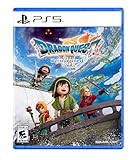
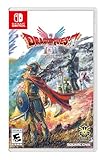
- Top Pick: DRAGON QUEST III HD-2D Remake (NSW)
- Best Value: DRAGON QUEST VII Reimagined – PlayStation 5
- Premium Choice: DRAGON QUEST I & II HD-2D Remake (NSW)
If you want the short answer on Dragon Quest games: there are twelve mainline numbered entries, you do not need to play them in order, and the two best starting points today are Dragon Quest XI S: Echoes of an Elusive Age Definitive Edition or the HD-2D remake of Dragon Quest III. Every numbered game tells a self-contained story with its own cast and world, so you can begin almost anywhere. The only loose connections are two informal trilogies, and even those are optional reading rather than required homework.
As an Amazon Associate I earn from qualifying purchases.
Created by Yuji Horii, with character designs by the late Akira Toriyama and music by the late Koichi Sugiyama, Dragon Quest essentially invented the console JRPG template that Final Fantasy and hundreds of others built on. Here are eight of the strongest entries to consider.
| Game | Platform | Genre | Why It’s Great | Rating |
|---|---|---|---|---|
| Dragon Quest XI S: Echoes of an Elusive Age | PC, PS4, Xbox One, Switch | Turn-Based JRPG | The best modern entry point, with an orchestral score and huge, generous world | 9.5/10 |
| Dragon Quest III HD-2D Remake | PC, PS5, Xbox Series X|S, Switch | Turn-Based JRPG | Class-building freedom in a gorgeous HD-2D rebuild of the series’ pivotal game | 9/10 |
| Dragon Quest V: Hand of the Heavenly Bride | Nintendo DS, Mobile | Turn-Based JRPG | A generational story with monster recruiting and the famous marriage choice | 9.5/10 |
| Dragon Quest VIII: Journey of the Cursed King | PS2, Nintendo 3DS, Mobile | Turn-Based JRPG | The series’ leap into full 3D, with the warmest party in any entry | 9.5/10 |
| Dragon Quest IV: Chapters of the Chosen | Nintendo DS, Mobile | Turn-Based JRPG | Chapter structure introduces each party member through their own story first | 8.5/10 |
| Dragon Quest IX: Sentinels of the Starry Skies | Nintendo DS | Turn-Based JRPG | Create your own party and grind an enormous postgame with local multiplayer | 8.5/10 |
| Dragon Quest Builders 2 | PC, PS4, Switch, Xbox | Sandbox Builder | Combines block-building with a genuine Dragon Quest story campaign | 9/10 |
| Dragon Quest Monsters: The Dark Prince | Nintendo Switch | Monster Collector | Deep synthesis-based breeding that rivals anything in the creature-collecting genre | 8/10 |
🛒 Best Price Today on Amazon
Prime members get fast, free shipping on everything above, plus member-only deals. New members get a 30-day free trial — cancel anytime.
All the Dragon Quest games in order
The numbered series runs from 1986 to the present and spans nearly every Nintendo, Sony and, more recently, Microsoft platform. Below is the release order alongside what each entry contributed, so you can pick by appeal rather than by number.
The Erdrick trilogy: Dragon Quest I, II and III
Dragon Quest launched on the Famicom in 1986 and arrived in North America as Dragon Warrior in 1989. It was startlingly simple by modern standards — one hero, one enemy at a time, no party — but it established the menu-driven combat, the overworld map and the slime mascot that have never left the series. Dragon Quest II: Luminaries of the Legendary Line added a three-person party and multi-enemy encounters in 1987. Dragon Quest III: The Seeds of Salvation, in 1988, was the genuine landmark: it let you build your own party from selectable classes, introduced a day and night cycle, and closed the trilogy with a twist that recontextualises the first two games. Chronologically the trilogy runs III, then I, then II. The HD-2D remake of III arrived in November 2024, with a combined HD-2D remake of I and II following in 2025, making this the most approachable way into the classic era.
The Zenithian trilogy: Dragon Quest IV, V and VI
Dragon Quest IV: Chapters of the Chosen divides its opening into separate chapters, each following a different future party member before uniting them, which remains one of the most elegant structures in the genre. Dragon Quest V: Hand of the Heavenly Bride is the entry most long-time fans name as the series’ best story: it spans three generations of one family, lets you recruit monsters into your party years before Pokemon existed, and asks you to choose a spouse in a decision that genuinely shapes the back half of the game. Dragon Quest VI: Realms of Revelation closes the trilogy with a dual-world structure and a refined class system. All three received excellent Nintendo DS remakes that are still the definitive versions for IV, V and VI.
Dragon Quest VII, VIII and IX
Dragon Quest VII: Fragments of the Forgotten Past is enormous, notoriously slow to start, and rewards patience with one of the longest campaigns in the series; the 3DS version trims the opening considerably. Dragon Quest VIII: Journey of the Cursed King moved the series into full 3D on PlayStation 2 with cel-shaded visuals that still look superb, and its four-person party is widely regarded as the most charming the series has assembled. Dragon Quest IX: Sentinels of the Starry Skies went handheld-only on Nintendo DS, dropped a fixed cast in favour of a fully customisable party, and became a phenomenon in Japan thanks to local wireless multiplayer and a colossal postgame of randomly generated dungeons.
Dragon Quest X, XI and the future
Dragon Quest X Online is an MMO that has remained a Japan-exclusive throughout its life, later gaining an offline single-player version there as well. Dragon Quest XI: Echoes of an Elusive Age brought the series back to a traditional single-player structure and is the finest modern entry: gorgeous, generous, and unafraid of a long story. The Definitive Edition, subtitled S, adds a fully orchestrated soundtrack, a 2D display mode that renders the entire game in retro sprites, extra character episodes and voice acting, and it is available across PC, Switch, PlayStation and Xbox. Dragon Quest XII: The Flames of Fate was announced in 2021 and remains in development, with Horii signalling a darker tone and changes to the combat system. Long JRPG sessions are exactly where hardware comfort shows, and our gaming chair buying guide exists for precisely this kind of hundred-hour campaign.
The spin-off Dragon Quest games worth playing
Dragon Quest Builders and its superior sequel Builders 2 graft a proper Dragon Quest narrative onto block-based construction, and Builders 2 in particular is one of the best games in the entire franchise regardless of numbering. Dragon Quest Heroes and Heroes II apply the Warriors-style action formula to the series’ bestiary. The Dragon Quest Monsters line, most recently The Dark Prince, offers genuinely deep monster synthesis breeding. Dragon Quest Treasures is a lighter treasure-hunting adventure starring Erik and Mia from XI. There are also mobile-first entries and a long-running card game, most of which stayed in Japan.
Where to start with Dragon Quest games
For most newcomers the answer is Dragon Quest XI S. It is modern, available on everything, beautifully presented, and completely standalone. If you prefer classic design, the HD-2D remake of III is the best-looking retro-style JRPG on the market and its class system gives you real agency. If you want the strongest story and do not mind older visuals, Dragon Quest V on DS is the enthusiast’s pick. Avoid starting with VII unless you are already sold on the series, because its pacing tests even devoted fans. A good display makes HD-2D games in particular look remarkable, as our gaming monitor buying guide and handheld gaming accessories buying guide both discuss.
What makes Dragon Quest games distinct
Dragon Quest has been deliberately conservative for four decades, and that consistency is the point. Combat remains turn-based, menu-driven and front-facing. Toriyama’s designs give even the most threatening monsters a rounded warmth. Sugiyama’s compositions are orchestral and endlessly reused as motifs across entries. Towns are small, dense and full of incidental dialogue that changes as the plot moves. There are no grand narrative subversions of the format; instead each game refines the same reliable pleasures. The series has sold well over eighty million copies, the overwhelming majority in Japan, where a new mainline release is a national event. Turn-based play is also remarkably kind to whatever hardware you own, which our controller buying guide, gaming headset buying guide and mechanical keyboard buying guide all touch on for players building a comfortable long-session setup.
Frequently Asked Questions
Do I need to play the Dragon Quest games in order?
No. Every numbered entry has its own self-contained story, cast and world, so you can start with whichever appeals most. Only the loose Erdrick trilogy of I to III and the Zenithian trilogy of IV to VI share connections, and those are thematic nods rather than required continuity.
Which Dragon Quest game should I play first?
Dragon Quest XI S: Echoes of an Elusive Age Definitive Edition is the strongest starting point because it is modern, available on every current platform and entirely standalone. Players who prefer classic design should try the HD-2D remake of Dragon Quest III instead.
How many Dragon Quest games are there in total?
There are twelve numbered mainline entries, with Dragon Quest XII: The Flames of Fate still in development, plus dozens of spin-offs spanning builders, monster collectors, action games, board games and mobile titles. Not all spin-offs received releases outside Japan.
Is Dragon Quest X available outside Japan?
Dragon Quest X Online has remained a Japan-exclusive throughout its life, and the later offline single-player version was also released only there. Western players skipping from IX to XI miss no essential story, since each numbered entry stands alone.
As an Amazon Associate we earn from qualifying purchases at no extra cost to you.